• Welcome to Baptist Board, a friendly forum to discuss the Baptist Faith in a friendly surrounding.

    Your voice is missing! You will need to register to get access to all the features that our community has to offer.

    We hope to see you as a part of our community soon and God Bless!

Modern Missions Methodologies - biblical or pragmatic?

Armchair Apologist

Well-Known Member
The Fundamentalism thread took a turn into discussion about Missions and the differing philosophies between the SBC and IFB worlds. I would be interested in further discussion here.

John of Japan stated something to the effect that support of missionaries at the denominational level is nowhere to be found in the scriptures and I responded that deputation is nowhere to be found in the scriptures as well but does this make either of these methods as being unscriptural? Mission boards are also nowhere to be found nor can we find "Faith Promise Giving!"

What we do have is Christ's mandate to his disciples to "Go and teach all nations..." and it is clear that these apostles did just that and that this mandate is still in effect given to the New Testament Church and will be in effect until Christ returns.

For the record, Paul did not travel around in converted buses or luxury RVs nor did he fly across the ocean as none of these had yet been invented. However, if Paul's ministry took place in this modern age, I would almost guarantee you that he certainly would not be against these things and would likely utilize some or all of these. I would venture to say that he would also likely have Paypal, Zelle, Cashapp, and other means by which he could receive "support" in order to continue his ministry! I guess we could also speculate whether he would receive support from the NAMB or IMB (SBC), or whether he would go through some board such as BIMI (IFB)?

I have some involvement with different churches and ministries in the Philippines as I have stated before. For the most part, I would say that "Primitive" or "Pioneer" missions is a thing of the past here and the Philippines is no longer considered to be a part of the 10/40 window with Churches capable of calling and training indiginous pastors and leaders who already know the language and culture because they were raised up in such. I speak with pastors all the time who have a desire to go out and start new churches in unreached or underserved areas but the challenge is in regards to the resources required for a potential church-planting pastor to actually go out and focus their time and energy into such endeavors. They often have to work full-time in order to take care of their families and meet other financial obligations and truth be known, there are only so many hours in a day! Our church is currently partnering with another church in the establishment of a church in Camotes. We are providing financial support for the pastor as well as funds for a property and building. Another church in the Iloilo area has identified two potential church plants and I am going over there ("Wheels-up" next Wednesday as a matter of fact) to assist where I can and hopefully have a plan of action in which I can bring back to the states and share with a few churches who may be willing to partner with this local church in the Philippines as these new works are established! I am trying to consider the best means in which to do this - Should I do this through an IFB missions board? Should I use the resources available through the SBC (IMB, NAMB, Etc.), or should I start my own 501c3?

As I said, I would really appreciate your input as well as your prayers!
 

John of Japan

Well-Known Member
Site Supporter
The Fundamentalism thread took a turn into discussion about Missions and the differing philosophies between the SBC and IFB worlds. I would be interested in further discussion here.

John of Japan stated something to the effect that support of missionaries at the denominational level is nowhere to be found in the scriptures and I responded that deputation is nowhere to be found in the scriptures as well but does this make either of these methods as being unscriptural? Mission boards are also nowhere to be found nor can we find "Faith Promise Giving!"
While it is true that deputation per se is not mentioned in Scripture, what is completely biblical (which I mentioned) is for missionaries to be supported by individual churches. The Bible says, "For even in Thessalonica ye sent once and again unto my necessity" (Phil. 4:16). Again, "I robbed other churches, taking wages of them, to do you service" (2 Cor. 11:8).

In the second Scripture, we learn that multiple local churches supported Paul. The process of deputation involves visiting local churches and then being supported by them. Hudson Taylor believed in never asking for funds, and I followed that principle in my deputation and furlough ministries, but never ever lacked. God always answered my faith and provided. Anyway, if a missionary is supported by multiple churches, he has a responsibility to communicate with them, visit them, and be accountable to them. While that is not deputation, per se, yet it easily leads to a philosophy of deputation, "deputizing" churches for their support and help.

Now about denominations, they exist nowhere in Scripture. By "denomination" I generally mean a group of churches which band together and have a headquarters. All churches in the Bible were independent. This state of affairs continued for at least 250 years in church history.

Granted, the SBC churches are not ruled by the denomination, and each church owns its own building and goes its own way. But at a minimum I believe the SBC method is not the best for missions, while still lauding the 1000s of missionaries who have gone out under the IMB. I have known some of those missionaries, and many are wonderful missionaries.
 

John of Japan

Well-Known Member
Site Supporter
One major difference between SBC missions and IFB missions is that most (not all) independent Baptist mission boards major on church planting and do not usually build educational and charity edifices (except for medical missions). My own mission board, with over 300 missionaries, was strictly for church planting. Missionaries were not allowed to build other edifices than church buildings.

Personally, I do not consider someone who teaches in a school for missionary kids, for example, to be an actual cross-cultural missionary. They are doing an important work, but they are not missionaries. I am jealous for the ministry of cross-cultural missions.
 

Armchair Apologist

Well-Known Member
While it is true that deputation per se is not mentioned in Scripture, what is completely biblical (which I mentioned) is for missionaries to be supported by individual churches. The Bible says, "For even in Thessalonica ye sent once and again unto my necessity" (Phil. 4:16). Again, "I robbed other churches, taking wages of them, to do you service" (2 Cor. 11:8).

In the second Scripture, we learn that multiple local churches supported Paul. The process of deputation involves visiting local churches and then being supported by them. Hudson Taylor believed in never asking for funds, and I followed that principle in my deputation and furlough ministries, but never ever lacked. God always answered my faith and provided. Anyway, if a missionary is supported by multiple churches, he has a responsibility to communicate with them, visit them, and be accountable to them. While that is not deputation, per se, yet it easily leads to a philosophy of deputation, "deputizing" churches for their support and help.
Being supported by your HOME CHURCH is quite biblical and I would go so far as to say if you do not have the support of your home church, you need to stay home! I was thinking about Paul's missionary journeys as I was typing the OP and wondering if some would arrive at the conclusion that such was indicative of "deputation" but if such was the case, he was certainly on deputation as he went! What is clearly seen though is a New Testament model where Paul established churches, the churches became self-supporting, then they supported Paul and likely others (evangelists, missionaries, church planters, etc.) to establish other churches. I believe this is important to consider whether IFB, SBC, or whatever your affilliation. These congregations may be autonomous but there is definitely a cooperative interaction going on.
 

Armchair Apologist

Well-Known Member
Personally, I do not consider someone who teaches in a school for missionary kids, for example, to be an actual cross-cultural missionary. They are doing an important work, but they are not missionaries. I am jealous for the ministry of cross-cultural missions.
I have seen some in the IFB doing "Medical Missions" and "Missionary Aviation" among other things. I would say that such things are critical to gaining inroads to actually proclaiming the gospel message itself! I have a friend in Papua New Guinea who goes into communities and drilling water wells for them. This gives him (or someone else) opportunity to establish a gospel witness that hopefully becomes the establishment of a new church. Those who teach in schools for missionary kids certainly take a heavy burden off the missionaries allowing them to focus upon the work for which they have been called so yes, I would not discount what they do at all! I do not think I would ever consider myself an actual "missionary," perhaps a member of the "supporting cast" and I am fine with this.
 

John of Japan

Well-Known Member
Site Supporter
I have seen some in the IFB doing "Medical Missions" and "Missionary Aviation" among other things. I would say that such things are critical to gaining inroads to actually proclaiming the gospel message itself! I have a friend in Papua New Guinea who goes into communities and drilling water wells for them. This gives him (or someone else) opportunity to establish a gospel witness that hopefully becomes the establishment of a new church. Those who teach in schools for missionary kids certainly take a heavy burden off the missionaries allowing them to focus upon the work for which they have been called so yes, I would not discount what they do at all! I do not think I would ever consider myself an actual "missionary," perhaps a member of the "supporting cast" and I am fine with this.
I agree that pilots and medical missions are important and even vital on some fields. No pilots in the Bible, but Luke was a medical missionary, amen? In my own missiology, the biblical missionary is the "apostle," not just the original 12 (who are special), but the secondary ones in the NT. But even the 12 were evangelistic church-planters, my definition of a missionary.

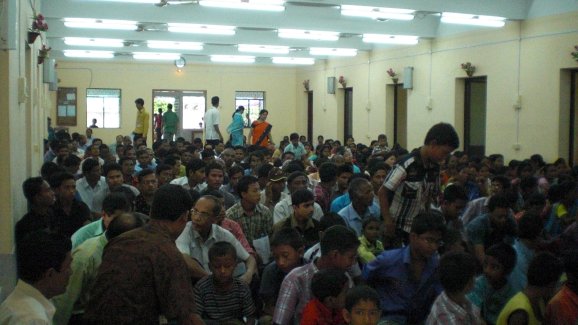
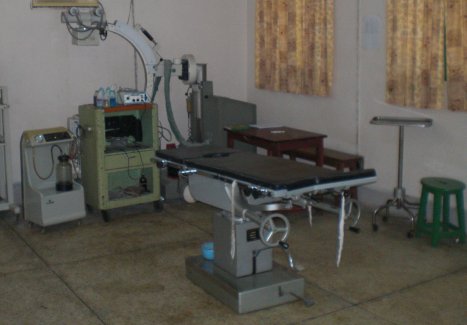
I have visited a medical missionary from Japan who was planting a church. I'll attach pictures of his operating room and his church (filled!) folk, who I was privileged to preach to. This was in a Muslim majority (86%) country, so I'll not show him or tell more about him. He is a true missionary!
 

Attachments

  • church crowd.JPG
    church crowd.JPG
    1.7 MB · Views: 1
  • CIMG0740.JPG
    CIMG0740.JPG
    1 MB · Views: 1

John of Japan

Well-Known Member
Site Supporter
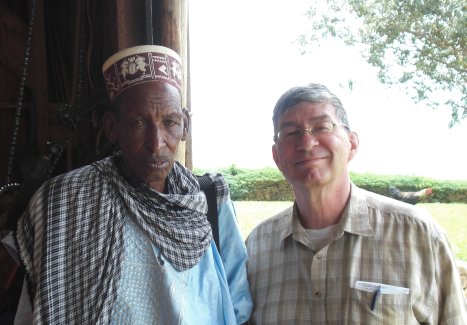
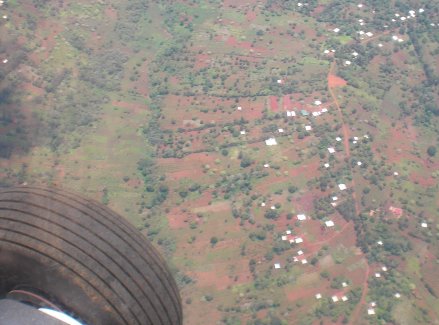
I also visited a pilot in Africa who is also a church planter. "There I was, looking down from 6000 feet at villages where there was no Gospel witness at all, and no churches of Jesus Christ."

There I am with the plane, a Fulani Muslim, and looking down from the plane.

I'll write more tomorrow. I'd be happy to advise you on mission boards.
 

Attachments

  • CIMG4399.JPG
    CIMG4399.JPG
    902.4 KB · Views: 1
  • CIMG4526.JPG
    CIMG4526.JPG
    929.4 KB · Views: 1
  • CIMG4534.JPG
    CIMG4534.JPG
    1 MB · Views: 1

Armchair Apologist

Well-Known Member
I agree that pilots and medical missions are important and even vital on some fields. No pilots in the Bible, but Luke was a medical missionary, amen? In my own missiology, the biblical missionary is the "apostle," not just the original 12 (who are special), but the secondary ones in the NT. But even the 12 were evangelistic church-planters, my definition of a missionary.

I have visited a medical missionary from Japan who was planting a church. I'll attach pictures of his operating room and his church (filled!) folk, who I was privileged to preach to. This was in a Muslim majority (86%) country, so I'll not show him or tell more about him. He is a true missionary!
Luke most certainly was a medical missionary! I do not think there is anything in the scriptures speaking of Luke actually "Practicing Medicine" but he no doubt took care of Paul especially after attending a rowdy "rock concert" if you get my drift.:Cool

There is movie about the Apostle Paul I saw either on Amazon or Netflix where Paul was at the end of his ministry about to be executed and Luke is there with him (as 2 Timothy states). It is discovered that the Roman centurion responsible for overseeing the execution has a child suffering from some sort of illness and reluctantly allows Luke to examine him. Luke is able to cure him (through conventional medical means) which leads to the conversion of this Roman creating a rather awkward situation where he still has to follow orders for Paul's execution. I thought it was well done.

Apostolos literally means "sent" so it is actually permissable (albeit not advisable) to call a missionary an "apostle" and certain ones who do call themselves apostles often define the term in such a way but then elevate themselves to the same status as one of the twelve which is the main reason why I personally would not advise the use of the term.

There are Muslim countries which forbid any missionary activity or church planting and I have met a few Christian professionals (Engineers, Doctors, Scientists, etc.) who go there to work in their given profession and do "Missionary work" on the side. Not sure what they do or what sort of "success" they have but I am certain such requires a great deal of patience and extreme caution! Not sure if you could call them "church planters" but they are worthy of our respect nonetheless! Filipino OFWs are ideal candidates for such work as they can often get into places many Americans cannot.
 

David Lamb

Well-Known Member
Here in the UK we have Grace Baptist Mission. It is unlike many "mission boards" in that it sees the local church as being responsible for sending missionaries. It's website includes this:

"Grace Baptist Mission is a church-based mission, helping Grace Baptist churches to support and care for their missionaries worldwide.

We are based in the United Kingdom, with our Mission Centre in Abingdon, and we work with local churches to support their missionaries in more than a dozen countries in Europe, Latin America, Africa and Asia.

We also have a radio ministry producing Bible-teaching programmes for listeners in both English and French, based in our radio studios in Abingdon and broadcast over numerous Christian radio stations worldwide."

Grace Baptis Mission's website is: Grace Baptist Mission – Helping Churches Support Their Missionaries Worldwide
 
Top