I am not arguing. Teaching, yes, and Yashua will judge me because of it. It is dangerous but we are all called to teach.Is arguing over “the Lord’s day” in accordance with living in the Lord’s love?

Welcome to Baptist Board, a friendly forum to discuss the Baptist Faith in a friendly surrounding.
Your voice is missing! You will need to register to get access to all the features that our community has to offer.
We hope to see you as a part of our community soon and God Bless!
I am not arguing. Teaching, yes, and Yashua will judge me because of it. It is dangerous but we are all called to teach.Is arguing over “the Lord’s day” in accordance with living in the Lord’s love?
I am not a Seventh-Day Activist but I do believe in The Seventh-Day Sabbath.... Nowhere in scripture does it say the Lord changed the Sabbath from the 7th day to the first day. A decision made by the Roman church in the third or fourth century.Romans 14:5-13
One man esteemeth one day above another: another esteemeth every day alike.
Let every man be fully persuaded in his own mind. He that regardeth the day, regardeth it unto the Lord; and he that regardeth not the day, to the Lord he doth not regard it.
And whoever eats any food and give thanks to God is giving thanks to God for the food.... And those who choose a kosher diet and give thanks give thanks to the Lord. The Lord provides everything.He that eateth, eateth to the Lord, for he giveth God thanks; and he that eateth not, to the Lord he eateth not, and giveth God thanks. For none of us liveth to himself, and no man dieth to himself.
AmenFor whether we live, we live unto the Lord; and whether we die, we die unto the Lord: whether we live therefore, or die, we are the Lord's. For to this end Christ both died, and rose, and revived, that he might be Lord both of the dead and living.
Is it actually judging or pointing out what is written? The Lord said judge with righteous judgment.But why dost thou judge thy brother? or why dost thou set at nought thy brother? for we shall all stand before the judgment seat of Christ.
AmenFor it is written, As I live, saith the Lord, every knee shall bow to me, and every tongue shall confess to God.
But "judge" this rather that no man put some stumbling block or an occasion to fall in his brother's way - people have a tendency to put stumbling blocks before another causing the other to deny some things and accept others. And Worse!So then every one of us shall give account of himself to God. Let us not therefore judge one another any more: but judge this rather, that no man put a stumblingblock or an occasion to fall in his brother's way.
I’d be interested in an SDA exegesis on these verses.
Yes.Is arguing over “the Lord’s day” in accordance with living in the Lord’s love?
Those citations are provided in the previously linked materials, and re-cited here as follows, pgs 200-201:I am not a Seventh-Day Activist but I do believe in The Seventh-Day Sabbath.... Nowhere in scripture does it say the Lord changed the Sabbath from the 7th day to the first day. A decision made by the Roman church in the third or fourth century. ...

Those verses do not say that arguing about the Lord’s day is living in the Lord’s love.Yes.
- Rev_3:19 As many as I love, I rebuke and chasten: be zealous therefore, and repent.
- Lev 19:17 Thou shalt not hate thy brother in thine heart: thou shalt in any wise rebuke thy neighbour, and not suffer sin upon him.
- Lev 19:18 Thou shalt not avenge, nor bear any grudge against the children of thy people, but thou shalt love thy neighbour as thyself: I am the LORD.
This is teaching. Presenting the scriptures on the matter to those opposed to God's law:Those verses do not say that arguing about the Lord’s day is living in the Lord’s love.
2 Timothy 2:24
And a servant of the Lord must not be quarrelsome, but must be kind to everyone, able to teach, and forbearing.
Going off from the original Rom. 14 passage topic, and wandering to other texts, unrelated in context, seems to be a pattern with the responses given to my inquiries. I shall respond to this once, in grace, and so that all may be without excuse.... Galatians 3:19
Wherefore then serveth the law? It was added because of transgressions, till the seed should come to whom the promise was made; and it was ordained by angels in the hand of a mediator. ...
You try to say you are “teaching”, but that is your ego.This is teaching. Presenting the scriptures on the matter to those opposed to God's law:
- Rom_8:7 Because the carnal mind is enmity against God: for it is not subject to the law of God, neither indeed can be.
It has nothing to do with 'quarrelsome', but rebuking against error, and calling persons back to the truth (Psa. 119:142,151).
You may of course disagree, that is your quarrel with me, who is simply teaching.You try to say you are “teaching”, but that is your ego.
You strut around like some exalted, self-impressed authority.
You are not gentle.
You are prideful and not humble. The Pharisees were like that.
You are quarreling, not teaching.
There is in matter of categories still, and again once more of phrasing in category (7th day (Lord's day), vs the day of the Lord) but I can agree with some things which were stated in response.If there is confussion, it is not mine.
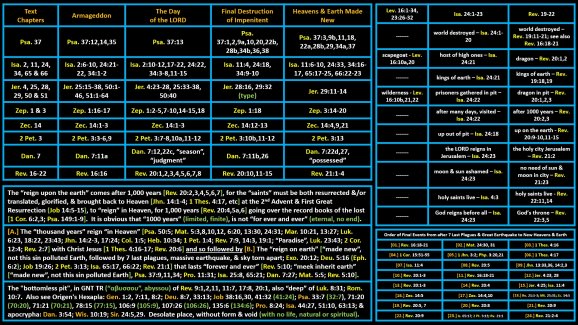
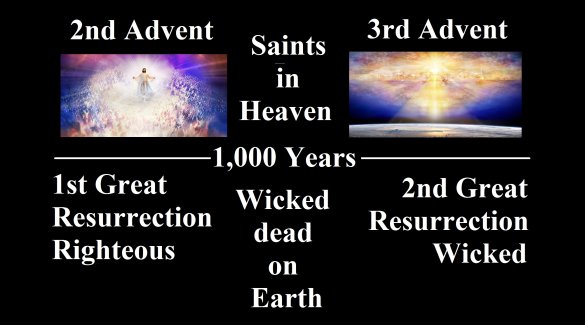
I was referring to "the Lord's day" (the 7th day the Sabbath of the LORD God) and not "the day of the LORD" (1000 years which essentially begins just before the 2nd advent, and terminates in the ending of the 3rd advent - 1000 Years Millennium Here Or There & Internet Archive: Digital Library of Free & Borrowable Texts, Movies, Music & Wayback Machine ), which are two differing terms, and time frames. My response did not mention "the day of the LORD" either - Let's FOCUS on Recovering the LORD"s Day and such response was merely addressing the confusion of the categories of 'sabbath' and 'worship'. This is another category, of "the Lord's day" and "the day of the LORD" - Single Page (Dual Sided) Charts - Prophecy Print OutsI have not spoken of the Day of the LORD but rather I speak to the topic defined in the OP, the LORD's Day. The Day of Rest.
Yes and no, depending on whether what is done is a violation against or sanctified by the LORD, and this just for clarification to any reading later.But scripture tells us to do all things unto the LORD.
Yes, which is what I agreed with in the previous response - Let's FOCUS on Recovering the LORD"s DayMy contention is that every day is to be lived as unto the LORD.
I can agree with some of this here, and have seen quite a bit of that in various churches / congregations, and is a problem everywhere, and not specific to any single one. The 'bread' and 'fish' persons, who come to be filled, but still walk away empty of the true manna, the true life, the true conversion. Some are 'liberal', and some are 'conservative', but what is needful is "conversion".Instead, folks sit in the pews on Sunday, some, Saturday, clapping their flippers as to say feed me, I call them Pew Whales.
Understood, and I agree, that is a bad witness, and a faulty example of what Christianity is. Such a life is not glorifying to God, and makes a mockery of the true conversion necessary.Monday they get up cursing because the kids are asleep and after sinning all day they stop for Happy Hour at the Hog's Breath Saloon and try to seduce te 21 year old Bar Hop.
Agreed.This is Planed Sin and is not forgiven except they repent.
I agree. I just do not desire any to exclude the 7th day, the sabbath of the LORD, in so doing such in all the other days of the week. The regulation from God in the commandment, and in God's own example, is part and parcel of the true worship of God. Any who knowingly dishonour the commandment, dishonour their Father in heaven, and so cannot worship (worthy of honour / glory / praise) in truth.But better is to get up praising the Master and do all we do in that day as if we do it for Yashua and our Father.
Yes, we are called to a life of sinlessness.Any person can live this life, the Holy Life, the life we are called to live but people love sin.
Every day of the 7 day week was made by God, this is true (Gen. 1-2), but the 7th day, the sabbath is uniquely God's (thus called "the Lord's day", Gen. 2:2-3; Exo. 20:8-11; Isa. 58:13; Mat. 12:8; Mar. 2:27-28; Luk. 6:5; Rev. 1:10, &c.) as in that day, God rested, which was not done in any of the others.Every day is The LORD's and we need to live that way.
- Psa_92:1 A Psalm or Song for the sabbath day. It is a good thing to give thanks unto the LORD, and to sing praises unto thy name, O most High:Otherwise we are Hypocrites.

That is the only way to bring people under the Law. They must do it forcefully.You try to say you are “teaching”, but that is your ego.
You strut around like some exalted, self-impressed authority.
You are not gentle.
You are prideful and not humble. The Pharisees were like that.
You are quarreling, not teaching.
Moses’ Law | God’s Law (Ten Commandments) |
Called “the law of Moses” (Jos. 23:6; Luk. 2:22; 1 Cor. 9:9, &c) | Called “the ten commandments” of the LORD [JEHOVAH] (Exo. 34:28; Deu. 4:13, 10:4) |
Spoken by God through Moses (Exo. 35:4; Num. 30:1; Lev. 10:11; Deu. 4:14,45; Heb. 9:19; &c.) | Spoken directly by God without Moses (Exo. 20:22; Deu. 4:12-13,15; Neh. 9:13) |
Called [carnal] “ordinances” (Num. 9:12; 2 Chr. 33:8; Eze. 43:11,18, 44:5, 45:14, 46:14; Col. 2:14; Eph. 2:15; Heb. 9:1,10) | Called “the royal [kingly] law” (Jam. 2:8-11, see also Num. 23:21; Psa. 44:4, 47:7, 68:24, 74:12, 84:3, 95:3, 145:1; Isa. 44:6; Jer. 10:10; Dan. 2:37; 1 Tim. 6:15; Rev. 17:14, 19:16) |
Written by Moses at God’s command (Exo. 17:14, 24:4, 34:27; Deu. 31:9; Neh. 8:14; Mar. 10:4, 12:19; Luk. 20:28; Jhn. 1:45, 5:46) | Written directly by God, “finger”, “[Holy] Spirit” (Exo. 31:18, 32:16, 34:1,28; Deu. 9:10; Mat. 12:28; Luk. 11:20) |
In A Book (Exo. 17:14; Deu. 31:24; 2 Chr. 34:14, 35:12; Ezr. 6:18; Neh. 13:1; Mar. 12:26; Heb. 9:19) | Originally on 2 Tables of The Sapphire Stone [later on regular stone and later on the two tables of the Heart/mind] (Exo. 24:10,12, 31:18, 34:1,4,28; Deu. 10:3-4; Num. 15:38-39; Jer. 31:31-34; Eze. 1:25-28, 10:1, 11:19-20, 36:26-27; Heb. 8:8-13, 10:16; 2 Cor. 3:3,6) |
Many decrees to do with worldly sanctuary (Lev. 18:5, 20:22; Deu. 4:1,5; Psa. 18:22; Mal. 4:4) | “the ten commandments” (Exo. 34:28; Deu. 4:13, 10:4), the “whole” duty of [the] man [all in Adam the first and last] (Ecc. 12:13-14; Psa. 119:96); heavenly sanctuary (Heb. 8:2, 9:11; Rev. 11:19, 15:5) |
Placed “in the side [outside] of the ark” (Deu. 31:26, see also 1 Kin. 8:9) | Placed “into [inside] the ark” (Exo. 40:20; Deu. 5:1-5) |
Abolished in Jesus’ flesh at Calvary / Cross (Eph. 2:15), “till the seed should come”, “time of reformation” (Gal. 3:19; Heb. 9:10) | “will I not break … nor alter”, “settled for ever”, “everlasting”, “founded them for ever”, “endureth for ever” (Deu. 4:2; Psa. 89:34, 111:7-8, 119:89,142,152,160,172; Mat. 5:17; Rev. 11:19, 15:5, a transcript of God’s character – Exo. 33:12-23, 34:1-9, 20:5-7) |
“Added [to an already existing Law] because of transgressions [sin]” (Gal. 3:19) | Existed at the beginning (Gen. 4:7, 16:5, 5:16, 18:20, 19:15, 20:9, 31:36, 39:9, 44:16; Exo. 9:27,34, 10:16-17; Job 1:5,22, 7:20, 8:4, 22:15-17, 24:19, 31:33, 33:27; Isa. 3:9; Lam. 4:6; Eze. 28:12-19; Rom. 2:12, 3:23, 5:12-21; 2 Cor. 11:3; 1 Tim. 2:14; 2 Pet. 2:4; Jud. 1:6) |
More given (Exo. 30:22; Lev. 4:1) | Self-contained, Complete, “added no more” (Deu. 5:22) |
Changeable [Type to Antitype] (Act. 6:14; Heb. 7:12,18) | Cannot be altered, “sure” (Psa. 89:34, 111:7-8), unchangeable as God (Exo. 33:12-23, 34:1-9, 20:5-7; Psa. 102:12,25-27; Mal. 3:6; Heb. 1:10-12, 13:8) |
“Against us”, “contrary to us” (Deu. 4:26, 30:19, 31:19,21,26,38; Jos. 24:22; Col. 2:14) | “not grievous” (1 Jhn. 5:3), “made for [the] man” (Mar. 2:27), “good” (Rom. 7:12,16; 1 Tim. 1:8), the law is not “against the promises” (Gal. 3:21), but the Ten Commandments are in fact all promises of God in the New and Everlasting Covenant (Eph. 6:2; Heb. 8:6, &c) |
Identifies [Points to] the Saviour [Jesus] (Gen. 3:15,21; 22:8 Exo. 12:3-11; Jhn. 1:29,36; Rev. 13:8) | Identifies [Points out] sin (Rom. 3:20, 7:7,14; Jam. 2:10-11; 1 Jhn. 3:4) |
Not to be judged by (Col. 2:16-17) | Judges all (Ecc. 12:13-14; Rom. 7:7,14; Jam. 2:10-13; 1 Jhn. 3:4) |
“carnal”, “worldly” (Col. 2:8,20; Heb. 7:16, 9:1,10) | “spiritual” (Rom. 7:14,22), “spirit” (Jhn. 6:63; Exo. 31:18, 32:16, 34:1,28; Deu. 9:10; Mat. 12:28; Luk. 11:20) |
Their faulty promises were a “yoke”, “of bondage” (Act. 15:10,24; Gal. 5:1; Heb. 8:7-9; Exo. 19:8) | “walk at liberty”, “law of liberty”, “free” (Psa. 119:45; Jam. 1:25, 2:12; Isa. 58:6,13; Jhn. 8:32-36; Exo. 20:2; Deu. 5:6; Mat. 5:19; Rom. 6:22, 8:2: Gal. 4:26,31, 5:1: 1 Pet. 2:16) |
“made nothing” “perfect” (Heb. 7:19, 9:9, 10:1; Gal. 3:3) | Is “perfect” (Exo. 32:16; Deu. 32:4; 2 Sam. 22:31; Psa. 18:30, 19:7, 40:8; Rom. 2:12; 2 Tim. 3:16-17; Jam. 1:25) |
“ceased”, “abolished”, “remaineth no more sacrifice for sin” (Dan. 9:27; Eph. 2:15; Heb. 10:26) | “magnified” by Jesus/Calvary (AD 31) (Isa. 42:21; Mat. 5:1-7:29; Rom. 3:31) |
A “whole law” which cannot justify for salvation (Gal. 5:1-3) | A “whole duty” to do through faith & Holy Spirit (Ecc. 12:13-14; Luk. 17:10; Eph. 2:8-10; Tit. 3:4-8) |
So much to like (agreeing with scripture / history), so much to not like (disagreeing with scripture / history):
- The 7th Day The Sabbath - The Rest Of His Eternal Story (by Aaron Earnest) : Free Download, Borrow, and Streaming : Internet Archive
The Lord's day is not 'sunday', see for yourself:
- Single Page (Dual Sided) Charts - Prophecy Print Outs : Free Download, Borrow, and Streaming : Internet Archive
You can also consider the errors, fraudulent materials, interpolations of others here - What is "the Lord's day", the 7th day, the 1st day or some other eschatological day, or something else?
Or just ask.

If by "there", you mean Rev. 1:10; it internally, by its own structural format, contextually refers to the 7th day the sabbath (rest; Heb. 4:5) of the LORD, of which there is nothing "greater". The sabbath (rest) of the LORD exists (Gen. 2:1-3; Exo. 5:4-5,9, 16:23-29) before 'the old covenant' (Exo. 19:3-8), and the typological things were given, as it exists before the sin of mankind, being "made for [the] man ("τον ανθρωπον", "ton anthrōpon"; [the] Adam, see Origen's Greek Hexapla, Gen. 1:27, "τὸν ἄνθρωπον")" (Mar. 2:27).What if there Lord's Day is something more significant than a day of the week and the Old Testament Sabbath observance pointed to a greater Rest?
BIBLE TEXTS | ISAIAH 58:13 Various Translations | REVELATION 1’s PARALLELISM |
Genesis 2:1-3,4 - … God [the LORD] … day … | CJB - “... Adonai’s holy day ..." | (1) Isa 55:4 → Rev 1:5 (Witness) |
Exodus 16:23 - … the LORD … day … | ERV - "... the Lord’s special day ..." | (2) Dan 7:13 → Rev 1:7 (Coming with Angels) |
Exodus 16:25,26 - ... the LORD … day … | EXB - “... the Lord’s holy day ..." | (3) Zec 12:10-14 → Rev 1:7 (Pierced & Wail) |
Exodus 20:8-11 - … the LORD … day … | GW - "... the Lord’s holy day ..." | (4) Isa 41:4,6 → Rev 1:8 (I AM) |
Exodus 31:15 - … the LORD … day … | ICB - “... the Lord’s holy day ..." | (5) Isa 58:13 → Rev 1:10 (The Lord's day) |
Exodus 35:2,3 - … the LORD … day … | ISV - "... the Lord’s holy day ..." | (4) Isa 41:4,6 → Rev 1:11 (I AM) |
Leviticus 23:3,38 - … the LORD … day … | TLB - "... the Lord’s holy day ..." | (3) Zec 4:2 → Rev 1:12 (7 Gold Candlesticks) |
Numbers 15:31,32 - … the LORD … day … | MSG - "... God’s holy day ..." | (2) Dan 7:9,13,22 → Rev 1:13-15 (Priest) |
Deuteronomy 5:12,14,15 - … the LORD … day… | NOG - "... Yahweh’s holy day ..." | (1) Isa 49:2 → Rev 1:16 (Sharp Sword) |
Nehemiah 9:6,13,14 - … the LORD … day … | NABRE - "... the Lord’s holy day ..." | ------- |
Isaiah 56:6 - … the LORD … [day] … | NCV - "... the Lord’s holy day ..." | IMPORTANT TEXTS |
Isaiah 58:13 - … [the LORD's] … day … | NET - "... the Lord’s holy day ..." | Gen 2:1 Thus the heavens and the earth were finished, and all the host of them. |
Isaiah 66:22,23 - … the LORD … [day] … | NIRV - "... the Lord’s holy day ..." | Gen 2:2 And on the seventh day God ended his work which he had made; and he rested on the seventh day from all his work which he had made. |
Jeremiah 17:21 - … the LORD … day … | NIV - "... the Lord’s holy day ..." | Gen 2:3 And God blessed the seventh day, and sanctified it: because that in it he had rested from all his work which God created and made. |
Ezekiel 46:1,4,12 - … the LORD … day … | NIVUK - "... the Lord’s holy day ..." | ------- |
Matthew 12:8 - … the Lord … day … | NLT - "... the Lord’s holy day ..." | Exo 20:8 Remember the sabbath day, to keep it holy. |
Mark 2:28 - … the Lord … day … | TPT - "... Yahweh’s holy day ...” | Exo 20:9 Six days shalt thou labour, and do all thy work: |
Luke 6:5 - … the Lord … [day] … | KJB - "... my [the LORD's] holy day ..." | Exo 20:10 But the seventh day is the sabbath of the LORD thy God: in it thou shalt not do any work, thou, nor thy son, nor thy daughter, thy manservant, nor thy maidservant, nor thy cattle, nor thy stranger that is within thy gates: |
Revelation 1:10 - … the Lord's day … | Isa 58:13 - If thou turn away thy foot from the sabbath, from doing thy pleasure on my holy day; and call the sabbath a delight, the holy of the LORD, honourable; and shalt honour him, not doing thine own ways, nor finding thine own pleasure, nor speaking thine own words: | Exo 20:11 For in six days the LORD made heaven and earth, the sea, and all that in them is, and rested the seventh day: wherefore the LORD blessed the sabbath day, and hallowed it. |
------- | ------- | ------- |
| Mat 12:8 For the Son of man is Lord even of the sabbath day. | Mar 2:28 Therefore the Son of man is Lord also of the sabbath. | Luk 6:5 And he said unto them, That the Son of man is Lord also of the sabbath. |
... continuing to cite the chart:What if there Lord's Day is something more significant than a day of the week and the Old Testament Sabbath observance pointed to a greater Rest?
THE IMMEDIATE CONTEXT OF REV 1:10 | TO THE LAW & TO THE TESTIMONY | THE REVELATION OF THE PATTERN |
| John was on the Isle of Patmos for what reasons? Rev 1:2 - ... the word of God ... the testimony of Jesus Christ … Rev 1:9 - ... the word of God ... the testimony of Jesus Christ … It is even given in other places: Rev 6:9 - ... the word of God ... the testimony ... Rev 20:4 - ... the witness of Jesus ... the word of God ... What are these two things? No need to guess: Rev 12:17 - ... the commandments of God ... the testimony of Jesus Christ. This is found way back in the OT: Deut 4:2 - ... the word which I command you, ... the commandments of the LORD your God ... When John writes "the Lord's day" (Rev. 1:10), it is in the context of "the word of God", or, God's Commandments. Well, which commandment then? John says: Rev 14:7 - ... worship him that made heaven, and earth, and the sea, and the fountains of waters. Rev 14:12 - ... keep the commandments of God ... the faith of Jesus. John is specifically citing the 4th Commandment: Exo 20:11 - For in six days the LORD made heaven and earth, the sea, and all that in them is, and rested the seventh day: wherefore the LORD blessed the sabbath day, and hallowed it. The LORD has chosen a specific (definite article) "day”. It is thus "the LORD('s) ... day", being His sabbath, the 7th day, from the foundation of the world in Genesis 2:1-3,4, where therein it is "God('s; the LORD's) ... day". | The "word of God" = God's commandments: Isa 1:10 - ... the word of the LORD ... the law of our God ... The "testimony of Jesus" is the Spirit of prophecy (Rev 19:10): Rev 19:10 And I fell at his feet to worship him. And he said unto me, See thou do it not: I am thy fellowservant, and of thy brethren that have the testimony of Jesus: worship God: for the testimony of Jesus is the spirit of prophecy. Notice the two witnesses are always together: 2 Kin 17:13 - ... the LORD testified ... by all the prophets, and by all the seers ... keep my commandments ... the law which I commanded ... by my servants the prophets. Psa 19:7 - The law of the LORD ... the testimony of the LORD ... Psa 78:5 - ... a testimony ... a law ... Pro 29:18 - ... vision ... the law ... Isa 8:16 - ... the testimony ... the law ... Isa 8:20 - ... the law ... the testimony ... this word ... Lam 2:9 - ... the law ... prophets ... vision from the LORD. Eze 7:26 - ... a vision of the prophet ... the law ... Mat 22:40 - ... the law ... the prophets. Rom 3:21 - ... the law ... the prophets; Rev. 1:10 - I [John] was in the Spirit on the Lord’s day … | The Apostle and prophet John receives a "vision" in connection with keeping God's word, His commandments; resting specifically on "the LORD's day" (Rev. 1:10): Revelation 1:10 - I was in the Spirit on the Lord's day, and heard behind me a great voice, as of a trumpet, The Law (Lord's day) & the testimony (in the spirit; prophecy): Look again at the parallels: - [A1] Rev. 1:2 “word” & “testimony” - [B1] Rev. 1:9 “word” & “testimony” - [C1] [Reverse] Rev. 1:10 “in the Spirit” & “the Lord’s day” - [A2] Rev. 6:9 “word” & “testimony” - [B2] Rev. 12:17 “commandments” & “testimony” - [C2] [Reverse] Rev. 20:4 “witness” & “word” It ("the Lord's day (Rev. 1:10)) always speaks of the 7th day the sabbath of the LORD, His holy day of His “word” or “commandments”, and the “Spirit” refers to the “testimony” or “witness”. Line upon line (Isa. 28:10,13; 1 Cor. 2:3), and no need for a single non-scriptural source to re-define it for anyone, but the word of God defines itself, and cannot be broken (Jhn. 10:35), and therefore, let us speak according to that truth (Jhn. 17:17) in His righteousness (Isa. 8:20; 1 Pet. 4:11). The Sabbath of the LORD (Gen. 2:1-3; Exo. 20:8-11; Mar. 2:27; &c) is always His day of rest, "from the foundation of the world" (Heb. 4). |


I was primarily thinking Matthew 11:28-30 and Hebrews 4:9-11.If by "there", you mean Rev. 1:10; it internally, by its own structural format, contextually refers to the 7th day the sabbath (rest; Heb. 4:5) of the LORD, of which there is nothing "greater". The sabbath (rest) of the LORD exists (Gen. 2:1-3; Exo. 5:4-5,9, 16:23-29) before 'the old covenant' (Exo. 19:3-8), and the typological things were given, as it exists before the sin of mankind, being "made for [the] man ("τον ανθρωπον", "ton anthrōpon"; [the] Adam, see Origen's Greek Hexapla, Gen. 1:27, "τὸν ἄνθρωπον")" (Mar. 2:27).
- See pages 147-160 - The 7th Day The Sabbath - The Rest Of His Eternal Story (by Aaron Earnest)
- Or this single page (dual sided) chart - Single Page (Dual Sided) Charts - Prophecy Print Outs
Citing the book in part:
"... [page 147] Revelation 1:10 KJB - I was in the Spirit on the Lord’s day, and heard behind me a great voice, as of a trumpet,
Revelation 1:10 GNT TR - εγενομην εν πνευματι εν τη κυριακη ημερα και ηκουσα οπισω μου φωνην μεγαλην ως σαλπιγγος ..."
Citing the chart:
(1) Isa 55:4 → Rev 1:5 (Witness) (2) Dan 7:13 → Rev 1:7 (Coming with Angels) (3) Zec 12:10-14 → Rev 1:7 (Pierced & Wail) (4) Isa 41:4,6 → Rev 1:8 (I AM) (5) Isa 58:13 → Rev 1:10 (The Lord's day) (4) Isa 41:4,6 → Rev 1:11 (I AM) (3) Zec 4:2 → Rev 1:12 (7 Gold Candlesticks) (2) Dan 7:9,13,22 → Rev 1:13-15 (Priest) (1) Isa 49:2 → Rev 1:16 (Sharp Sword) Gen 2:1 Thus the heavens and the earth were finished, and all the host of them. Gen 2:2 And on the seventh day God ended his work which he had made; and he rested on the seventh day from all his work which he had made. Gen 2:3 And God blessed the seventh day, and sanctified it: because that in it he had rested from all his work which God created and made. Exo 20:8 Remember the sabbath day, to keep it holy. Exo 20:9 Six days shalt thou labour, and do all thy work: Exo 20:10 But the seventh day is the sabbath of the LORD thy God: in it thou shalt not do any work, thou, nor thy son, nor thy daughter, thy manservant, nor thy maidservant, nor thy cattle, nor thy stranger that is within thy gates: Isa 58:13 - If thou turn away thy foot from the sabbath, from doing thy pleasure on my holy day; and call the sabbath a delight, the holy of the LORD, honourable; and shalt honour him, not doing thine own ways, nor finding thine own pleasure, nor speaking thine own words: Exo 20:11 For in six days the LORD made heaven and earth, the sea, and all that in them is, and rested the seventh day: wherefore the LORD blessed the sabbath day, and hallowed it. Mat 12:8 For the Son of man is Lord even of the sabbath day. Mar 2:28 Therefore the Son of man is Lord also of the sabbath. Luk 6:5 And he said unto them, That the Son of man is Lord also of the sabbath.
The off-topic, category errors, and logical fallacies in this thread are quite something to behold, as well as the competing (conflicting) theories / reasonings of men as to why they ought not simply obey God in the commandment (Exo. 20:8-11); Jhn. 14:15, Exo 20:6.I feel like I am in the quagmire of the Millerites! Maybe if Mr Helpful of the Pilgrims Progress can give me a hand!