
• Welcome to Baptist Board, a friendly forum to discuss the Baptist Faith in a friendly surrounding.

    Your voice is missing! You will need to register to get access to all the features that our community has to offer.

    We hope to see you as a part of our community soon and God Bless!

Does the reformed church need to be reformed, more?

Dave...

Active Member
Yes. According to the reformers themselves, and, in my opinion, the reformation became stagnant soon after it's inception, and a lot of error still remained. The reformation was never meant to stop reforming. To quote Banner of Truth...Writer I. John Hesselink ...

"It is rather audacious to claim that we are reformed. It can also be misleading when we call ourselves Reformed Churches. For this might imply that we believe that our denominations are truly reformed; or, even worse, that at some point in the past we were or became reformed and that the task of reform is basically finished. Whenever we imagine that the word “reformed” refers to an accomplishment rather than a perpetual obligation, we are presumptuous and deluded".
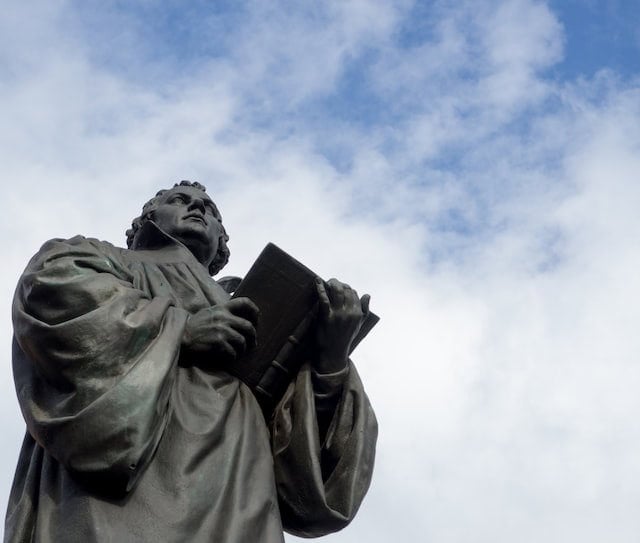

Ecclesia reformata semper reformanda est” – “A reformed church must always be reforming itself.” Luther, Calvin, Knox, they gave us a lot, but they were not infallible. There was still huge chunks of the Bible missing from their theology. There was obvious error. This was a direct result of the Catholic church that they came out of. While their systems of theology give a lot to be thankful for, that same theology had error in it. These theological errors continue to poison Bible translations and the church today. Elevating their writings to a status where they can never be corrected turns those theologians into the very type of unquestionable authority the Reformers sought to dismantle.

"always reforming" does not mean changing core doctrines to fit modern cultural trends. but we must consider things like the Reformers "flattened" the transition between the Testaments and minimized the New Covenant reality of the Holy Spirit, and this is one place of many wwhere the 16th-century Reformation stopped short. This needs to be fixed, not worshipped.
 

Marooncat79

Well-Known Member
Site Supporter
We must constantly be critiquing out worship ie songs prayers etc and be willing to return to a regulative principle of worship when we start drifting
 

Dave...

Active Member
We must constantly be critiquing out worship ie songs prayers etc and be willing to return to a regulative principle of worship when we start drifting

Do you think that the acronym T.U.L.I.P., as the fixture that it is today, would be counter productive to “A reformed church must always be reforming itself."? It's like a fixture that should not be one. Scripture is sufficient to interpret Scripture. Martin Luther would have considered infant baptism a fixture, so would Calvin, though not for justification. This is the problem with fixtures outside the Bible defining Scripture. They aren't Scripture. But most of todays Calvinists treat T.U.L.I.P. that way.

I wouldn't call todays reformers 'Sola Scriptura'. They are more 'Sola Systema'. :) The system is the fixture that defines Scripture, and in my opinion, has become an idol in and of itself.

Try to get a Calvinist to see Scripture apart from using the systems interpretation of total depravity as a foundation to interpret it. They won't, and they can't, It just won't happen. Their definition of total depravity is off. This is simply replacing the Catholic church with the system. That's not allowing for any reformation from the opinions of Scripture from the first reformers. It stonewalls any corrections.
 
Last edited:

Martin Marprelate

Well-Known Member
Site Supporter
Do you think that the acronym T.U.L.I.P., as the fixture that it is today, would be counter productive to “A reformed church must always be reforming itself."? It's like a fixture that should not be one. Scripture is sufficient to interpret Scripture. Martin Luther would have considered infant baptism a fixture, so would Calvin, though not for justification. This is the problem with fixtures outside the Bible defining Scripture. They aren't Scripture. But most of todays Calvinists treat T.U.L.I.P. that way.
The 1689 Baptist Confession begins by saying, 'The Holy Scripture is the only sufficient, certain, and infallible rule of all saving Knowledge, Faith and Obedience.' That is outside the Bible. Should we not have any statements of what we believe because we might change our minds and 'reform' ourselves in a diffrent direction? The problem with the 1689 Confession is not what's in there but what isn't. There's nothing about same-sex 'marriage' or women in the pastorate. It needs updating in that direction.
I am entirely happy with the TULIP acronym, save that I would maybe change the L for an E for 'Effectual,' but T.U.E.I.P. doesn't have the same ring to it. If someone shows me from the Bible that it's wrong, then we would need to change it, but in 35 years, no one has.
I wouldn't call todays reformers 'Sola Scriptura'. They are more 'Sola Systema'. :) The system is the fixture that defines Scripture, and in my opinion, has become an idol in and of itself.
Are you quite sure that it's not you who is 'Sola Systema'?
Try to get a Calvinist to see Scripture apart from using the systems interpretation of total depravity as a foundation to interpret it. They won't, and they can't, It just won't happen. Their definition of total depravity is off. This is simply replacing the Catholic church with the system. That's not allowing for any reformation from the opinions of Scripture from the first reformers. It stonewalls any corrections.
This is nonsense. The reasons that Reformed folk support the term 'Total Depravity' is that they see it in the Bible. If they cease to see it there, no doubt they will stop upholding it. If you don't see it, I feel sorry for you, but it's OK.
 

Dave...

Active Member
The 1689 Baptist Confession begins by saying, 'The Holy Scripture is the only sufficient, certain, and infallible rule of all saving Knowledge, Faith and Obedience.' That is outside the Bible. Should we not have any statements of what we believe because we might change our minds and 'reform' ourselves in a diffrent direction? The problem with the 1689 Confession is not what's in there but what isn't. There's nothing about same-sex 'marriage' or women in the pastorate. It needs updating in that direction.

I wrote...""always reforming" does not mean changing core doctrines to fit modern cultural trends." for that reason.

But the early reformers were defending Catholicism as much as standing against it. They just didn't realize it. The foundation with which Catholicism is built is still there in the reformed theology, and even today. That's why I call the reformed movement "Catholic light" Things like flattening the transition from the OT to the NT is very much a necessity for Catholicism. This sets up the Priesthood as still functional for starters.

These early reformers had access to what other did not. But I don't think that necessarily makes them great theologians. They were the ones of their time that people looked to for answers. Everyone else that disagreed with Catholicism was murdered, and their works probably destroyed.

Like i said, we have a lot to be thankful for from the early reformers, but their theology was still very poisoned by Catholicism.


I am entirely happy with the TULIP acronym, save that I would maybe change the L for an E for 'Effectual,' but T.U.E.I.P. doesn't have the same ring to it. If someone shows me from the Bible that it's wrong, then we would need to change it, but in 35 years, no one has.

That's the point, it doesn't really allow for changes for obvious reasons. Total depravity means total inability. It's not what people define it as today. The inability is with our ability to do good according to the righteous standards of the Law. Thus, we cannot justify ourselves. "No not one...". Todays definitions go way beyond that and contradict Scripture.

People do start with the premise that TULIP is true, but it's not. I have proven it, but it just gets ignored. Mostly it's just people who look at a list of Scripture that appears to say what the claims that are made about it say, but when we begin to look at the context of those verses individually, the definitions of those passages in many cases teaches the exact opposite of todays claims of total depravity. The system is used to define Scripture. Ive said it many times, there is a lot of assuming in those definition of those lists of Scripture. When we look for the clear Scripture that is foundational to all those assumptions, we cannot find it.


Are you quite sure that it's not you who is 'Sola Systema'?

Pretty sure.

This is nonsense. The reasons that Reformed folk support the term 'Total Depravity' is that they see it in the Bible. If they cease to see it there, no doubt they will stop upholding it. If you don't see it, I feel sorry for you, but it's OK.

This is exactly why people still believe it. Because they want to. Not because Scripture teaches it.


Martin Marprelate

Well-Known Member
Site Supporter
But the early reformers were defending Catholicism as much as standing against it. They just didn't realize it. The foundation with which Catholicism is built is still there in the reformed theology, and even today. That's why I call the reformed movement "Catholic light" Things like flattening the transition from the OT to the NT is very much a necessity for Catholicism. This sets up the Priesthood as still functional for starters.
This will depend on what you mean by 'Priesthood.' There are no priests in Reformed Protestant theology that remotely resemble the Roman priesthood. And what do you mean by 'flattening the transition from the OT to the NT'? If you want to be an anabaptist, you are welcome but count me out.
These early reformers had access to what other did not. But I don't think that necessarily makes them great theologians. They were the ones of their time that people looked to for answers. Everyone else that disagreed with Catholicism was murdered, and their works probably destroyed.

Like i said, we have a lot to be thankful for from the early reformers, but their theology was still very poisoned by Catholicism.
John Robinson, the early leader of the Pilgrim Fathers, declared in his farewell speech, 'It is not possible that the Christian world should so lately come out of such thick anti-Christian darkness, and that the perfection of knowledge should break forth at once.' I agree with him and hence the need to be always reforming. It is remarkable that the Reformers did as well as they managed to do, but they were men of their time. Freedom of religion has still not been achieved in many parts of the world.
Total depravity means total inability.
Actually, no. Total depravity means total depravity - not that people are as evil as they can possibly be, but it means that every facet of their being is flawed by sin. Read Isaiah 1:4-6.

I don't intend to be drawn into another fruitless 'Cal vs. Arm' debate so this will be my last post on this thread. I confused you with another Dave on this board and thought there might be an interesting discussion on Reformed Theology.
 

Dave...

Active Member
This will depend on what you mean by 'Priesthood.' There are no priests in Reformed Protestant theology that remotely resemble the Roman priesthood. And what do you mean by 'flattening the transition from the OT to the NT'? If you want to be an anabaptist, you are welcome but count me out.
Hey Martin.

Thanks for taking the time to reply.

I agree, there are no priests in the reformed movement. But what is necessary to theoretically make room for that, or allow for it in ones theology is still in place in the reformed theology. You could call it, Catholic leftovers. Which is also false. That's just the tip of the iceberg. The Abrahamic Covenant was in promise (OT), and that promise was realized in the NC through the promised "Seed", who is Jesus, as recorded in the NT, especially Galatians 3. These two Covenants, the first in promise, the second in the receiving of that promise, are also distinguished by and in time by the Old and New Testaments, which are by definition each a dispensation. These two Covenants are not the same, though they speak of the same thing. One is in promise, the other is in the realization of that promise. The flattening out means that many reformed today believe that there never was a promise, and as a result, a promise to be realized, but that the Old Covenant functions exactly the same as the New Covenant. But this is a huge problem with Scripture. The Promises of the Old Covenant are realized in Jesus in His incarnation, and His death, resurrection, and ascension. And also realized in the giving of the Holy Spirit [indwelling], which places us in Christ, called the 'placing into' with/by the Holy Spirit, to receive all those saving ingredients. And this is possible only after the death, resurrection, and ascension. In short, the Old covenant promise was removed from the theology of todays reformers. This makes the Old Covenant the same as the New Covenant, no promise, no realization of that Promise in Christ incarnate. That idea, or quick fix, is completely impossible in light of Scripture. There are many other quick fixes, like claiming that Jesus was actually slain from the foundations of the world, so, in their minds, no need to wait for it, no need for the promise, it's already here. That's unacceptable. Clearly, that was decreed, but happened in time. And these things that I listed as 'promises realized' also waited for each other in time. Then the argument that I call relativism, which holds to the idea that God is not bound by time, and the implication is that if He is not bound by time, then all time sensitive Scripture means nothing because it already happened. Yes, it gets that bad. In my opinion, this is all a direct result of Catholic leftovers.

John Robinson, the early leader of the Pilgrim Fathers, declared in his farewell speech, 'It is not possible that the Christian world should so lately come out of such thick anti-Christian darkness, and that the perfection of knowledge should break forth at once.' I agree with him and hence the need to be always reforming. It is remarkable that the Reformers did as well as they managed to do, but they were men of their time. Freedom of religion has still not been achieved in many parts of the world.

Exactly! :) But the error that was still there in their thinking, the OR's, (original reformers), who still looked through Catholic glasses, though they desired not to, was and is very far reaching because their works are treated as somewhat of a finished work. Especially for new believers who haven't really grasped any context from Scripture and desire to know it. TULIP gives that apparent shortcut. I used it myself. It appeared to be right, but the more that I began to understand the context of Scripture, the more that I seen a lot of error in TULIP. It's like the people who use the Greek, but interpret every passage on an Island without regard for context.

I believe that early error is prevalent even today, and even carried over and used in modern day translations of the Bible.

Actually, no. Total depravity means total depravity - not that people are as evil as they can possibly be, but it means that every facet of their being is flawed by sin. Read Isaiah 1:4-6.

Also see Isaiah 1:16-18. I believe in original sin. I believe we are completely corrupted by sin. We inherited a separation from God by way of Adam. We're like a lamp that can only do good (give light), thus do a righteous act according to the Law, when we're plugged into God. I believe that anything done from the flesh is sin according to the righteous standards of the Law, hence, man cannot do good, or anything righteous according to the Law, from the flesh. All good that can pass as righteousness according to the Law, comes from the Holy Spirit. All sin comes from the flesh.

I don't believe that man must have a pure faith that must pass righteous standards according to the Law to receive the indwelling Holy Spirit, and thus the life. The desire to want to be saved is possible without being born again, or better put, without the life in us. Thus, with no indwelling, which is the life, we can say, there are none good, there are none righteous, no not one. That's the OT. But they can believe. All they need is a little light. The good, the righteousness according to the Law, comes from the ongoing faith, called life, that we receive as a result of initially believing. The indwelling Holy Spirit is the life. The indwelling Holy Spirit, the life, is the result of believing. A distinction must be made between the initial faith and the ongoing faith, called the life, or else Scripture speaking of one will be used to prove the other, and visa versa. This is todays Calvinism in a nut shell. They use "life" verses to prove things about the initial faith. Everything in the life, the ongoing faith is from God, It's grace, a gift. But we enter into that grace by faith.

Todays reformed mostly believe that man is incapable of believing from the flesh. I disagree, to a point. He believes in the flesh, but only as a result of the presence of God, the "Light" drawing Him. Thus the two option theory, of 'if they are not born again, it cannot be of grace, I would disagree with that. It's overly simplified and I could give many examples from Scripture why that it clearly wrong. There is a prevenient grace involved, otherwise nobody would ever believe to receive that indwelling life. And OT believers, would have nothing, since they didn't have the life at all, but only the presence of God and the Holy Spirit upon a few, Prophets, associates, kings, to do specific tasks. I don't see any evidence of the Holy Spirit being upon the average OT believer. Those average OT believers relied upon the presence of God in the Temple, Tabernacle, also the presence of the Holy Spirit who was upon those Prophets kings, etc.. Like with Jonah, who had the Spirit of Christ with Him, would not have converted Nineveh without that presence with him.

I don't intend to be drawn into another fruitless 'Cal vs. Arm' debate so this will be my last post on this thread. I confused you with another Dave on this board and thought there might be an interesting discussion on Reformed Theology.

But it will be fruitful, if you allow it to be. But that's on you. Thanks for the input.

Dave
 
Last edited:

Van

Well-Known Member
Site Supporter
The advocates of the TULIP need to reform those doctrines. And the view that only Arminians hold differing views is also false.

Let's go over the scriptural case against the TULIP one more time.

1) Did the Fall, the consequence of Adam's sin, result in humanity being made with "Total Spiritual Inability" such that the lost do not seek God and are unable to believe in Jesus Christ, unless enabled by Irresistible Grace? The answer is NO! Scripture provides numerous examples of lost individuals seeking God and His grace. 2 Thessalonians 2:13 clearly states God chooses individuals for salvation through faith in the truth. Thus they had not been chosen and enabled to believe.

2) When God chooses individuals for salvation, is His choice unconditional, or is it through faith in the truth? The answer is "through faith in the truth." 2 Thessalonians 2:13

3) Did Christ die as a ransom for all, or only for some? The answer is Christ died as a ransom for all, those to be saved and those never to be saved. 1 Timothy 2:4-6; 2 Peter 2:1

4) Are those willing and working to be saved being compelled irresistibly such that false teaching cannot prevent them from entering the kingdom of God? The answer is NO! Scripture teaches that some of those who hear and affirmatively respond to the gospel are not saved. See Matthew 13 and consider the plight of soils #2 and #3. See also Matthew 23:13.

5) The "P" of the TULIP sometimes is presented as Preservation of the Saints, which is True Doctrine. But at other times, the "P" is presented as Perseverance of the Saint, which is False Doctrine. Sometimes members of God's family backslide, then "come to their senses." This is because their faith is protected by the Power of God, such that once saved, always saved. 1 Peter 1:3-5. Once God causes an individual to be spiritually born anew, the individual cannot kill his or her everlasting life in Christ.
 

Martin Marprelate

Well-Known Member
Site Supporter
Hey Martin.
Thank you for your friendly response.
I have very limited time at present, so what I have done is just to cut and paste an extract from a blog post that I made many moons ago. By no means all Covenant theologians 'flatten' the difference between the Old and New covenants. Reformed Baptists in particular insist on the 'newness' of the new covenant. But here is John Owen:

The writer to the Hebrews describes the new covenant as a ‘better hope’ (7:19) and a ‘better covenant’ (7:22; 8:6. cf. 9:11). The great Puritan John Owen, in his vast commentary on Hebrews, listed seventeen ways in which the two covenants differ, and in each, the new is superior. I think I can do no better than to list these differences, trying to put them very briefly in my own words. [I shall refer to the Sinaitic covenant as the ‘first’ covenant because that is how the writer to the Hebrews speaks of it]

  1. They differ in the time of their establishment. The first was established in the third month after the coming out from Egypt of the Israelites (Exod 19:1). The second, ‘At just the right time’ (Rom 5:6, NIV); ‘In the dispensation of the fullness of time’ (Eph 1:10). ‘When the fullness of the time was come’ (Gal 4:4). ‘When the Day of Pentecost had fully come….’ (Acts 2:1).
  2. They differ in the place of their establishment. The first covenant, in Sinai; the new covenant, in Jerusalem; but in this connection it is worth reading Gal 4:24-26. Sinai represents bondage; the new Jerusalem represents freedom.
  3. They differ in the manner of their promulgation (Heb 12:18-26). The first came with fire and the sound of a trumpet (Exod 19:18f); the New came with a voice from heaven (Psalm 110:4; Matt 3:17).
  4. They differ in their mediators. In the first covenant , it was Moses, who was faithful as a servant (Heb 3:5); in the New, it was Christ, a Son over His own house (Heb 3:6; 2Tim 2:5).
  5. They differ in their subject matter. The first covenant revived the demands of the covenant of works with Moses saying, “Cursed is the one who does not confirm all the words of this law” (Deut 27:26). In the new covenant, God’s law is written on our hearts with Christ saying, “My yoke is easy and My burden is light” (Matt 11:30), and we find ourselves saying, ‘His commandments are not grievous’ (1 John 5:3, A.V.).
  6. They differ in the manner of their dedication. In the first covenant, it was by the sacrifice of beasts and the blood sprinkled around the altar (Lev 8, 9). The New was confirmed by the sacrifice and blood of Christ Himself (Heb 10:19-23; 12:24).
  7. They differ in respect of the Priesthood. In the first covenant, the Priesthood was limited to Aaron and his posterity; in the New, Christ has an unchangeable priesthood in the power of an endless life (Heb 7:11-28).
  8. They differ in the matter of their sacrifices and their access to God. The Aaronic high priest could enter in to the Holiest Place only once a year having sacrificed for his own sins as well as those of the people; our Great High Priest had no sins of His own to atone for, but, ‘Not with the blood of goats and calves, but with His own blood He entered the Most Holy Place once for all, having obtained eternal redemption’ (Heb 9:12).
  9. They differ in the matter of their writing down. The first covenant was written on ‘tablets of stone,’ the New on ‘tablets of flesh, that is, of the heart’ (2Cor 3:3).
  10. They differ as to their purposes. ‘The principal end of the first covenant was to discover sin, to condemn it and to set bounds to it’ (John Owen; cf. Gal 3:19). The purpose of the new covenant is to show forth God’s justice and mercy (Rom 3:26).
  11. They differ in their effects. The first covenant was a ‘ministry of death’ and ‘of condemnation’ (2 Cor 3:7, 9); the New gives liberty (2 Cor 3:17-18).
  12. They differ in the grant of the Holy Spirit. It appears that during the period of the first covenant, the Holy Spirit was indeed active, but there was so much a wide and greater effusion of His power at Pentecost, that John speaks sometimes as if He had not come before (John 7:39; 15:26 etc.).
  13. They differ in the declaration made in them of the kingdom of God. The term ‘kingdom of heaven’ or ‘kingdom of God’ does not appear in the O.T. Israel under the first covenant had the appearance of a kingdom of the world (physical borders, an army, a physical temple). The kingdom of God has none of these things. The Lord Jesus declared, “My kingdom is not of this world’ (John 18:26). His subjects are spread throughout the earth, and have their citizenship in heaven.
  14. They differ in their substance and end. The first covenant was typical, shadowy and removable. The new covenant is substantial and permanent as containing the Body, which is Christ.
  15. They differ in the extent of their ministration. The first covenant was largely confined to Israel after the flesh, with darkness reigning all around. In the new covenant, we read, ‘The people walking in darkness have seen a great light’ (Isaiah 9:2).
  16. They differ in efficacy. The first covenant ‘made nothing perfect’ (Heb 7:19; cf. 8:7). It gave outward commands without giving the power to perform them (cf. Acts 15:10). In the new covenant, ‘says the Lord, “I will put My laws in their mind and write them on their hearts”’ (Heb 8:10).
  17. They differ in their duration. One was to be removed; one to abide forever (Heb 10:8-9).
We see therefore that the new covenant is the outworking of all God’s plans and promises, which are seen to be ‘Yes and Amen in Christ Jesus’ (2 Cor 1:20). The new covenant is in Christ’s blood (Luke 22:20) and cannot possibly fail (cf. Isaiah 42:4). It was planned and arranged in eternity, so that it is called the ‘everlasting covenant’ (Heb 13:20-21 etc.), and Christ, ‘The Lamb slain from the foundation of the world’ (Rev 13:8). It is the consummation of all the covenants of promise (eg. John 8:56; Acts 2:30), and ‘the end of the law (that is, its purpose and fulfillment) for righteousness to everyone who believes’ (Rom 10:40).

[From my blog: The New Covenant Free to use with or without proper attribution]
 
Top