What did the "Reformers" reform that needed reforming??

Welcome to Baptist Board, a friendly forum to discuss the Baptist Faith in a friendly surrounding.
Your voice is missing! You will need to register to get access to all the features that our community has to offer.
We hope to see you as a part of our community soon and God Bless!

Thanks for your reply. I am interested to learn more details concerning the changes made by the RCC to correct the abuses. Any source or documentation to enlighten me would be appreciated.Ultimately, the Catholic Church itself attacked many of the abuses that Luther had sought to put right.

What did the "Reformers" reform that needed reforming??
I find this to be a helpful summary (in parts) -What did the "Reformers" reform that needed reforming??
I don't intend to watch a 90min movie. Can you articulate the "helpful summary"?I find this to be a helpful summary (in parts)
Have you tried doing an internet search?So far, there are no documented responses. Why?
In 1408, Thomas Arundel, Archbishop of Canterbury, published the following decision:What did the "Reformers" reform that needed reforming??
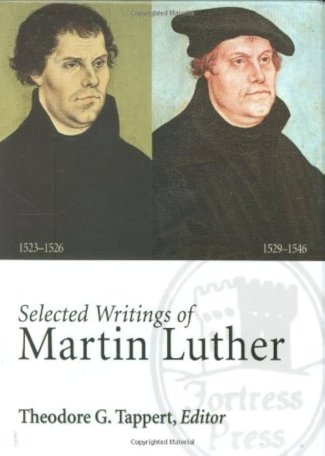
Martin Luther from a Catholic Perspective | Faithful CritiqueThanks for your reply. I am interested to learn more details concerning the changes made by the RCC to correct the abuses. Any source or documentation to enlighten me would be appreciated.
| Luther's Core Complaint | Council of Trent Resolution |
|---|---|
| The Sale of Indulgences | The Council strictly banned the sale and trafficking of indulgences for money, declaring the practice an abuse, though it upheld the spiritual validity of non-commercial indulgences. |
| Uneducated, Absentee Clergy | The Church mandated the creation of theological seminaries in every diocese to properly educate priests. It also outlawed absenteeism (bishops collecting income from regions where they did not reside). |
| Simony and Pluralism | It banned pluralism (the corrupt practice of one man buying or holding multiple church offices at the same time to amass wealth). |
| Financial Extortion | It established strict financial oversight and bookkeeping practices to eliminate embezzlement by church leaders. |
Thus, the Roman Catholic leadership reformed some administrative aspects to reinforce their institution, but did not reform their corrupt doctrines.Not an ”authoritative” source by any stretch of the imagination, but I asked and Google AI provided a summary:
Theological Separation
While the Catholic Church successfully cleansed its administrative corruption to restore institutional integrity, it firmly rejected Luther’s theological changes. The Council of Trent doubled down on traditional Catholic doctrines, officially condemning Luther's ideas of sola fide (salvation by faith alone) and sola scriptura(scripture as the sole authority). [1, 2, 3, 4, 5]
How about from about 1:18:00 to about 1:26:00 then.I don't intend to watch a 90min movie. Can you articulate the "helpful summary"?
What authority did the bishop of Rome have to claim infallibility ex cathedra and to reign as “pope” over all the bishops of other cities?Any of you guys ask what authority Luther had to interpret scripture differently to the whole Church? Or do you just grant him superior authority?
What authority did the bishop of Rome have to claim infallibility ex cathedra and to reign as “pope” over all the bishops of other cities?
Did he just grant himself superior authority?
The chair of Rome’s bishop was not recognized as supreme by the Orthodox Church and has no scriptural authorization, just vain traditions of men.The Chair of Peter had a long established apostolic authority.
But Luther? You grant authority why?
The chair of Rome’s bishop was not recognized as supreme by the Orthodox Church and has no scriptural authorization, just vain traditions of men.
John VI, Patriarch of Constantinople (715)If the Roman See recognizes Pyrrhus to be not only a reprobate but a heretic, it is certainly plain that everyone who anathematizes those who have rejected Pyrrhus also anathematizes the See of Rome, that is, he anathematizes the Catholic Church. I need hardly add that he excommunicates himself also, if indeed he is in communion with the Roman See and the Catholic Church of God ...Let him hasten before all things to satisfy the Roman See, for if it is satisfied, all will agree in calling him pious and orthodox. For he only speaks in vain who thinks he ought to pursuade or entrap persons like myself, and does not satisfy and implore the blessed Pope of the most holy Catholic Church of the Romans, that is, the Apostolic See, which is from the incarnate of the Son of God Himself, and also all the holy synods, accodring to the holy canons and definitions has received universal and surpreme dominion, authority, and power of binding and loosing over all the holy churches of God throughout the whole world. (Maximus, Letter to Peter, in Mansi x, 692).
St. Nicephorus, Patriarch of Constantinople (758-828)The Pope of Rome, the head of the Christian priesthood, whom in Peter, the Lord commanded to confirm his brethren. (John VI, Epist. ad Constantin. Pap. ad. Combefis, Auctuar. Bibl. P.P. Graec.tom. ii. p. 211, seq.)
Without whom (the Romans presiding in the seventh Council) a doctrine brought forward in the Church could not, even though confirmed by canonical decrees and by ecclesiastical usuage, ever obtain full approval or currency. For it is they (the Popes of Rome) who have had assigned to them the rule in sacred things, and who have received into their hands the dignity of headship among the Apostles. (Nicephorus, Niceph. Cpl. pro. s. imag. c 25 [Mai N. Bibl. pp. ii. 30]).
@Ascetic X will no doubt answer for himself as he has time, but I very much doubt that any Baptist or Bible-believing Protestant would hold Martin Luther as any authority beyond where his teaching is in line with the Bible; much less as an apostle. A quick flip through this thread did not reveal to me any poster who claimed Luther as an authority.You haven’t answered why you hold Luther as greater authority, or any authority at all.
Why is Luther your apostle?