It could be a flag, or a background on a sign. These are not Christian churches, but liberal churches. You won't find Jesus there. They will come as angels of light, though. I've seen a few in my neck of the woods already. The one in this youtube video is claiming to be a Baptist church.

-
Welcome to Baptist Board, a friendly forum to discuss the Baptist Faith in a friendly surrounding.
Your voice is missing! You will need to register to get access to all the features that our community has to offer.
We hope to see you as a part of our community soon and God Bless!
You are using an out of date browser. It may not display this or other websites correctly.
You should upgrade or use an alternative browser.
You should upgrade or use an alternative browser.
When a church in your neighborhood sports a rainbow out front.
- Thread starter Dave...
- Start date
Yes, they are an abominationIt could be a flag, or a background on a sign. These are not Christian churches, but liberal churches. You won't find Jesus there. They will come as angels of light, though. I've seen a few in my neck of the woods already. The one in this youtube video is claiming to be a Baptist church.

Ben1445
Well-Known Member
2. Use discretion when posting. Not all topics are beneficial or edifying to the board. Topics and/or posts that would condone racism, every form of greed, selfishness, and vice, and all forms of sexual immorality, including but not limited to adultery, homosexuality, and pornography are strictly prohibited. The decision to deem a thread or post inappropriate will remain at the discretion of the Webmaster or his designee. Titus 2:11 For the grace of God that bringeth salvation hath appeared to all men, 12 Teaching us that, denying ungodliness and worldly lusts, we should live soberly, righteously, and godly, in this present world; 13 Looking for that blessed hope, and the glorious appearing of the great God and our Saviour Jesus Christ.
From what I read, you’re fine. The post is in accordance with Titus 2.
We are not banned from being biblically minded.
My understanding is that topics that delve into the details are what is not acceptable.
I don’t see how you went any further than the rule itself.
I’m not a moderator or admin. My opinion may not have any impact on decisions made, but if they said it in the rule, I think you are okay.
From what I read, you’re fine. The post is in accordance with Titus 2.
We are not banned from being biblically minded.
My understanding is that topics that delve into the details are what is not acceptable.
I don’t see how you went any further than the rule itself.
I’m not a moderator or admin. My opinion may not have any impact on decisions made, but if they said it in the rule, I think you are okay.
Thanks Ben
I hear secular terms used to defend sin and error all the time. Love never rejoices in sin, rather, it rejoices in truth (1 Cor. 13:6). Jesus, His Word are truth. These churches will put secular meaning on words to confuse you. Never underestimate the power of redefining words. Marxism uses this technique very effectively. Always make them define the words. What does the Bible say about what love is? 1 Corinthians 13:6. "[love] does not rejoice in iniquity, but rejoices in the truth;".
This guy in the video who confronted that false church did a good Job of preaching the Gospel and defending the truth. He was respectful, but never at the expense of the truth.
Also remember, relativism, while passing itself off as a love fest of acceptance, is just as isolated in their beliefs as Christians. They can embrace all world views, and all religions, as long as they too are relativists. If they are not also relativist, then the relativist must reject them all. It's another slight of hand that they like to use.
Dave
I hear secular terms used to defend sin and error all the time. Love never rejoices in sin, rather, it rejoices in truth (1 Cor. 13:6). Jesus, His Word are truth. These churches will put secular meaning on words to confuse you. Never underestimate the power of redefining words. Marxism uses this technique very effectively. Always make them define the words. What does the Bible say about what love is? 1 Corinthians 13:6. "[love] does not rejoice in iniquity, but rejoices in the truth;".
This guy in the video who confronted that false church did a good Job of preaching the Gospel and defending the truth. He was respectful, but never at the expense of the truth.
Also remember, relativism, while passing itself off as a love fest of acceptance, is just as isolated in their beliefs as Christians. They can embrace all world views, and all religions, as long as they too are relativists. If they are not also relativist, then the relativist must reject them all. It's another slight of hand that they like to use.
Dave

Ascetic X
Well-Known Member
Why are these churches ignoring clear Bible teaching?
Romans 1:26-28
26 For this reason God gave them over to dishonorable passions. Even their women exchanged natural relations for unnatural ones. 27 Likewise, the men abandoned natural relations with women and burned with lust for one another. Men committed indecent acts with other men, and received in themselves the due penalty for their error. 28Furthermore, since they did not see fit to acknowledge God, He gave them up to a depraved mind, to do what ought not to be done.
Do these churches think they will draw more members by embracing the gay agenda? It seems to be backfiring. Woke denominations are losing members and church attendance in significant numbers.
Romans 1:26-28
26 For this reason God gave them over to dishonorable passions. Even their women exchanged natural relations for unnatural ones. 27 Likewise, the men abandoned natural relations with women and burned with lust for one another. Men committed indecent acts with other men, and received in themselves the due penalty for their error. 28Furthermore, since they did not see fit to acknowledge God, He gave them up to a depraved mind, to do what ought not to be done.
Do these churches think they will draw more members by embracing the gay agenda? It seems to be backfiring. Woke denominations are losing members and church attendance in significant numbers.

Here's an observation. I have watched the denominations that have started ordaining homosexuals who are 'practicing' and marrying gay couples.
These denominations already were in sharp decline before taking thus step off a very steep cliff. I know a liberal pastor (ELCA) who told me before her Synod changed their canons to become 'inclusive' that she expected a significant increase in church attendance once it happened. She expected once she could fly the rainbow that she could fling open the church doors and LGBTQXYZ would flood in. Didn't happen.
These denominations continue to be in sharp decline and I am not sure if it really matters that much to that many of their denominations leadership. It seems like this is the hill they have come to die on.
These denominations already were in sharp decline before taking thus step off a very steep cliff. I know a liberal pastor (ELCA) who told me before her Synod changed their canons to become 'inclusive' that she expected a significant increase in church attendance once it happened. She expected once she could fly the rainbow that she could fling open the church doors and LGBTQXYZ would flood in. Didn't happen.
These denominations continue to be in sharp decline and I am not sure if it really matters that much to that many of their denominations leadership. It seems like this is the hill they have come to die on.
Ascetic X
Well-Known Member
Here's an observation. I have watched the denominations that have started ordaining homosexuals who are 'practicing' and marrying gay couples.
These denominations already were in sharp decline before taking thus step off a very steep cliff….
These denominations continue to be in sharp decline and I am not sure if it really matters that much to that many of their denominations leadership. It seems like this is the hill they have come to die on.
A First Baptist church in my town is said to have a female associate pastor in a same sex relationship. It is the church where my first wife and I got wedded. I was thinking about attending it, until I heard this. I recently attended a Presbyterian church that has lesbian deacons. I also attended a Lutheran ELCA church. Loved having communion every Sunday. But at a Bible study, the leader said something about how gay is okay. Then there is a non-denominational church that has an LBGTQ banner in front of the building and the female pastor speaks of the Mother God.
It is very sad that so many churches have drifted so far from the Bible.
A First Baptist church in my town is said to have a female associate pastor in a same sex relationship. It is the church where my first wife and I got wedded. I was thinking about attending it, until I heard this. I recently attended a Presbyterian church that has lesbian deacons. I also attended a Lutheran ELCA church. Loved having communion every Sunday. But at a Bible study, the leader said something about how gay is okay. Then there is a non-denominational church that has an LBGTQ banner in front of the building and the female pastor speaks of the Mother God.
It is very sad that so many churches have drifted so far from the Bible.
Yes, the ELCA has lost it's theological mooring. Fortunately, the LCMS and WELS have kept a firm biblical position on the issue. However, there's constantly an attack on inerrancy of scripture within most seminaries I know about. It starts in the seminaries. If a denominations seminaries starts slipping, watch out.

A pastor/friend of mine as a general guideline will consider marrying anyone who asks him.
Christians must marry Christians but he will marry non-Christians with the stipulation that they attend counseling sessions with him.
He has had same sex couples ask to be married, that's where he draws a line.
Being as discrete and polite as he can, he directs them to the nearby rainbow church.
Rob
Christians must marry Christians but he will marry non-Christians with the stipulation that they attend counseling sessions with him.
He has had same sex couples ask to be married, that's where he draws a line.
Being as discrete and polite as he can, he directs them to the nearby rainbow church.
Rob

Sometimes a rainbow is just a rainbow.When a church in your neighborhood sports a rainbow out front. It could be a flag, or a background on a sign. These are not Christian churches, but liberal churches. You won't find Jesus there.
VBS banner from Ken Ham's Answers in Genesis curriculum:

Ascetic X
Well-Known Member
Sometimes a rainbow is just a rainbow.
VBS banner from Ken Ham's Answers in Genesis curriculum:
View attachment 13104
Not anymore. Rainbow is now pervasively perceived as homosexuality friendly. The LGBTQ community has hijacked the rainbow and are using it so much, no Christian organization or ministry can use it without appearing to support the gay-trans agenda.
Quite a shame, but that’s how images evolve and function semiotically in society.
Similar to how the swastika was hijacked.
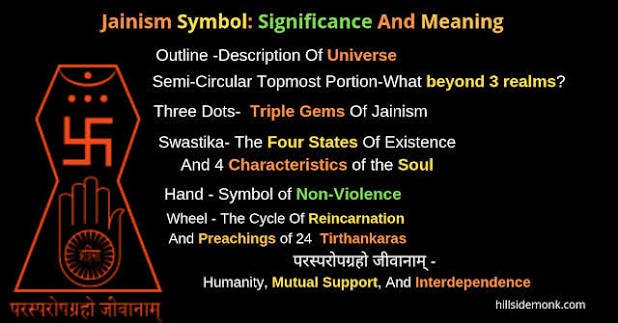
The swastika is an ancient symbol meaning "good fortune" in Sanskrit. It was used for millennia in Hinduism, Buddhism, and Native American cultures as a sign of divinity, spirituality, and good luck. It was appropriated by the Nazis and twisted into a hate symbol for antisemitism, white supremacy, and genocide, making its meaning drastically different and inherently hateful in the Western world
The swastika is still used in religious iconography by the super anti-violence Jains sect.
Attachments
Huh? The Holman Bibles division of the Southern Baptist Convention's Lifeway Christian Resources publishes the 'Rainbow Study Bible'!Rainbow is now pervasively perceived as homosexuality friendly. The LGBTQ community has hijacked the rainbow and are using it so much, no Christian organization or ministry can use it without appearing to support the gay-trans agenda.
Ascetic X
Well-Known Member
Huh? The Holman Bibles division of the Southern Baptist Convention's Lifeway Christian Resources publishes the 'Rainbow Study Bible'!
Like I said, the rainbow now primarily signifies the LGBTQ agenda, and that’s how most everybody will understand it. To call it the Rainbow Study Bible is an unfortunate choice. Confusion can result.
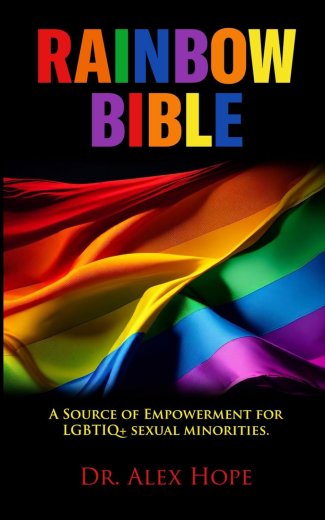
There is a Rainbow Bible for the LGBTQ community. So the Rainbow Study Bible could be perceived as a note filled version of it.
RAINBOW BIBLE: A Source of Empowerment for LGBTIQ+ sexual minorities: Hope, DR. Alex: 9798340353528: Amazon.com: Books
RAINBOW BIBLE: A Source of Empowerment for LGBTIQ+ sexual minorities [Hope, DR. Alex] on Amazon.com. *FREE* shipping on qualifying offers. RAINBOW BIBLE: A Source of Empowerment for LGBTIQ+ sexual minorities
www.amazon.com
Attachments
Huh? The Holman Bibles division of the Southern Baptist Convention's Lifeway Christian Resources publishes the 'Rainbow Study Bible'!
Yup, a poor title choice given the perception of the majority of people who will see it. I am sure it was an innocent decision, but as Ascetic X mentioned, it will cause unnescessary confusion.
Ben1445
Well-Known Member
I perceive the use of the rainbow as the world flying the promise of God not to destroy the earth with a worldwide flood. (whether or not they really know what they are doing)
It is the dumbest symbol to use given what God gave rainbows to represent.
It seems that it would hasten the judgment of the world to tell God that their sin should not be judged.
It is the dumbest symbol to use given what God gave rainbows to represent.
It seems that it would hasten the judgment of the world to tell God that their sin should not be judged.
Ascetic X
Well-Known Member
Rainbow imagery has a long history of symbolism. The Christians should have monopolized it as their own symbol of God’s promise, but they neglected to do that, so the enemies of righteousness hijacked it.
In Greek mythology, Iris, the messenger of the gods, traveled on the rainbow.
Since at least the late 15th Century, and the incorporation of the rainbow flag by the German theologian Thomas Müntzer in his reformist preachings, the symbol has been seized upon by religious and social activists to draw attention to their causes.
A version was unfurled in the 16th Century during the German Peasants’ War to signify the promise of social change.
In the 18th Century, the English-American revolutionary and author of the influential political tract Rights of Man, Thomas Paine, advocated for the adoption of the rainbow flag as a universal symbol for identifying neutral ships at sea.
The flag has since been flown by Buddhists in Sri Lanka in the late 19th Century as a unifying emblem of their faith, by Indians annually on 31 January to commemorate the passing of the spiritual leader Meher Baba, and by members of international peace movements.
The International Co-operative Alliance adopted it in 1925, and it's used by international peace movements (PACE flag) since 1961.
The song "Over the Rainbow" from The Wizard of Oz uses the rainbow as a symbol of dreams and a better place.
In its initial incarnation, Gilbert Baker’s homosexual rainbow flag consisted of eight colours – two more than the version now recognised internationally as an emblem for the LGBT community – and each colour was assigned a symbolic meaning. A band of hot pink (representing sexuality) ran across the top of the flag in the original scheme, followed by red (which stood for life), then by orange (for healing), yellow (sunlight), green (nature), turquoise (magic), indigo (serenity), and violet (spirit) at the bottom.
Displayed for the first time in the United Nations Plaza in downtown San Francisco in June 1978, this eight-striped version was produced by a team of 30 volunteers commandeering the washing machines of a public laundromat in order to rinse the dye from the fabric and the wide attic space of a gay community centre, where the individual strips were ironed and sewn together.
In Greek mythology, Iris, the messenger of the gods, traveled on the rainbow.
Since at least the late 15th Century, and the incorporation of the rainbow flag by the German theologian Thomas Müntzer in his reformist preachings, the symbol has been seized upon by religious and social activists to draw attention to their causes.
A version was unfurled in the 16th Century during the German Peasants’ War to signify the promise of social change.
In the 18th Century, the English-American revolutionary and author of the influential political tract Rights of Man, Thomas Paine, advocated for the adoption of the rainbow flag as a universal symbol for identifying neutral ships at sea.
The flag has since been flown by Buddhists in Sri Lanka in the late 19th Century as a unifying emblem of their faith, by Indians annually on 31 January to commemorate the passing of the spiritual leader Meher Baba, and by members of international peace movements.
The International Co-operative Alliance adopted it in 1925, and it's used by international peace movements (PACE flag) since 1961.
The song "Over the Rainbow" from The Wizard of Oz uses the rainbow as a symbol of dreams and a better place.
In its initial incarnation, Gilbert Baker’s homosexual rainbow flag consisted of eight colours – two more than the version now recognised internationally as an emblem for the LGBT community – and each colour was assigned a symbolic meaning. A band of hot pink (representing sexuality) ran across the top of the flag in the original scheme, followed by red (which stood for life), then by orange (for healing), yellow (sunlight), green (nature), turquoise (magic), indigo (serenity), and violet (spirit) at the bottom.
Displayed for the first time in the United Nations Plaza in downtown San Francisco in June 1978, this eight-striped version was produced by a team of 30 volunteers commandeering the washing machines of a public laundromat in order to rinse the dye from the fabric and the wide attic space of a gay community centre, where the individual strips were ironed and sewn together.