• Welcome to Baptist Board, a friendly forum to discuss the Baptist Faith in a friendly surrounding.

    Your voice is missing! You will need to register to get access to all the features that our community has to offer.

    We hope to see you as a part of our community soon and God Bless!

The Two Surrenders

Status
Not open for further replies.

John of Japan

Well-Known Member
Site Supporter
I have often looked at Acts in particular and questioned even what it was that people were asked to "believe". I see where many of the situations involved people who were already what you would call God followers, in that, due to the recentness of Christ's death and resurrection the word about this just wasn't out there yet. So. People were asked to believe that Jesus died and then rose, for sure. Other instances they were believing that he was "the Christ". In one case it is said that he died and rose and that by him is the remission of sin. In another case it is said that "all judgement is committed to Jesus".
I'm happy to answer. As a missionary, I learned that many Americans don't realize the importance of the resurrection. I have run across Japanese tracts that had the substitutionary atonement, but not the resurrection. It seems that Americans back in the day all knew about the resurrection through Easter, so they didn't feel it was part of the Gospel, though it is clearly there in 1 Cor. 15:1-8. So I always have included the resurrection in my Gospel presentations.

This is what they did in Acts. In Peter's Pentecost sermon, he spoke of it three times: 2:24, 30, 32. Ch. 3 has it twice, vv. 15 & 26. Over and over again throughout the book, every time the Gospel was preached the resurrection was preached, even cross-culturally on Mars Hill (17:18). As you have pointed out, there were other approaches and illustrations used, but the common thread is the substitutionary atonement and particularly the resurrection of Christ. And by the way, the Gospel does not include the burial, as is often said. The burial was not preached in Acts; it was the proof of the death. Again, Paul's long sentence continues through v. 8, meaning that the witnesses are proof of the resurrection.


I have a couple of questions and I ask, not to debate, but because I value your opinion. I never have asked anyone but it seems to me that there isn't really a very clear explanation of the gospel as we know it in Acts. (And I do have and read your grandfather's commentary on Acts and value it). I get the impression that most of the work in Acts, except Mars Hill, is about convincing or at least announcing to Jews and proselyte Jews who were already concerned about honoring God - that this man called Jesus, was truly and indeed the Christ, the one they all had been looking for.
This is kind of what I said in the previous paragraphs. Paul did clearly preach the resurrection at Mars Hill, but not so much the substitutionary atonement. That was cross cultural evangelism to a people group that knew nothing about the true God. So Paul started with theology proper: who God really is. I have done this kind of thing many times in Japan, and sometimes in other places (Hong Kong, Bangladesh). The resurrection completely grabs their attention, but often the substitutionary atonement takes time.

And I do admit that you are simply told to believe, with the only things added would be where they agreed not to put anything more on gentiles than, abstaining from fornication, meat offered to idols, and mishandling blood and so on. It does bother me that non-Lordship guys don't acknowledge anything to the claim that Lord Jesus or Lord Jesus Christ seems to be always the name used which to me has to have more significance than you give it, as just being a title.
"Lord" is just a title. However, it is a title with great significance to Jews, not so much to Gentiles. Note that the Greek "lord" (kurios) is shallow in meaning to the Greeks. It also means "Sir," "Boss," etc. The significance of Christ as Lord of all has to be taught. Now note that it is impossible to recognize Christ as Lord until regeneration occurs. To say that one must both believe in Christ and accept His Lordship both in order to be saved is to get the order wrong. We must be saved before we accept Him as Lord, or it is simply impossible. A lost person cannot accept Christ as Lord, even when he is believing. It is just impossible for him. Now some accept Christ as Lord immediately, but others take time.

This is where it is Calvinists who are most strident in favor of LS. They don't believe a person can "accept Christ as Savior" unless he is predestined to do so. So much for that. (I do my best not to argue Calvinism.)
And lastly, I find it significant but I don't know what to make of it, that it doesn't seem to be mentioned either to "accept Jesus as your Savior" or "accept Him into your heart".

There are several instances in Acts where the Apostles spent significant time in various places, teaching. Teaching what? It would seem that teaching to "believe" would be done in one sermon at most.
Many times in cross cultural evangelism the hearers have a hard time understanding the truth of Christ's atonement. They have to admit they are sinners first. In Japan, this means the wholesale rejection of their entire religious culture of Shinto and Buddhism, especially ancestor worship, which they have been taught all of their lives. Imagine telling an ancestor worshipper that the grandma they pray to daily is now in Hell. I've done that. It's tough. Now imagine telling that same person that they are not really saved until they accept Christ as complete Lord of their life. That's what LS demands. And it is impossible for that sinner to do, because they are not regenerated.

Now concerning "accept Jesus as Savior," I think John 1:11-12 covers that. As for "accept Him into your heart," there is Rom. 8:11, "But if the Spirit of him that raised up Jesus from the dead dwell in you, he that raised up Christ from the dead shall also quicken your mortal bodies by his Spirit that dwelleth in you." If you receive Christ, He then dwells in you in the form of the Holy Spirit.
That's just my thoughts and I would really value your opinion.
I hope these thoughts help. They come from my 33 years as a missionary to Japan. I often had to meditate on the Gospel and make sure my church folk and Bible school students were understanding it correctly.
 
Last edited:

John of Japan

Well-Known Member
Site Supporter
Okay, but to confess the Lord Jesus means to acknowledge Him as Lord, the one to obey, does it not?
You'll have to explain that further. I'm not sure of your theology here.

And again, I'd love for you to address my point that nowhere in John or Acts are people told to accept Christ as Lord. How in the world can you have a theology of evangelism if you don't research those two books?

And I'm curious. When you present the Gospel, do you do so like James Kennedy did in his book Evangelism Explosion (quoted in my previous post), explicating receiving Christ as Lord?
 

DaveXR650

Well-Known Member
I hope these thoughts help.
It helps a lot. Thank you. I think your observations about witnessing to different cultural groups applies here also. MacArthur and Washer were both dealing with folks who lived in a culture where it was desirable culturally to be considered "Christian", as long as you didn't get too serious about it. In other words, as long as you didn't start discussing any actual change of a persons life, it was "cool" to also be into Jesus.

My observations on that would be that the folks Washer and MacArthur were warning regarding genuine Christianity were much like the folks in the early church who, in Roman culture, were totally free to add Jesus as a god, as long as you were open minded enough to still offer that pinch of incense to the other gods or to the emperor, when you entered the marketplace. That is why the emphasis was on Jesus being the Christ or Jesus is God or God's exclusively chosen one. In Acts, if you acknowledged Jesus as "the One" or as "Christ" or as the "Lord", you were saying by that that you reject all the claims of all the other gods, even the emperor. And that is where you got into trouble with the pagan authorities.

In modern times, the issue is much the same but it's more like it's OK to say you love Jesus or want to be saved by him - just don't start this stuff of him having any claim on your life or behavior. Now, this is very important for you to hear, and also for any other person on here who has a fundamental Christian background: you guys were not guilty of this and are not who he was talking about. I was in independent fundamentalist churches from the late 70's through the 90's and we bashed head first into popular culture. My wife and I used to feel guilty when we went to a restaurant that served alcohol - not that we ever even considered drinking any! We made sure we dressed modestly - I'm sure you know of the women's conferences put on by some of the Rice girls. Well, my wife went to them and enjoyed them very much. In the late 80's and early 90's my independent Baptist church came under pressure to tone down the legalism and we were influenced by the shallow, modern "Christian lite" or easy believism that became the acceptable thing.

You mentioned Kennedy. I enjoyed listening to him on the radio, but thought he was mostly good as a political commentator rather than a preacher - but after he died, his church went with the no lordship, easy believism and split right down the middle. I say all that to help you understand that MacArthur and Washer were addressing a very specific and narrow cultural moment in American Christianity. I imagine their books on this then will never be theological classics. But their concerns were and are, at least in this country, still valid. We talk about Calvinism and Reformed theology, and how it was influenced by the needed breakoff from Roman Catholicism and point out that there may be flaws in it because of when they lived and who they came from. The same is said of American Fundamentalism, of which I still consider myself a part and owe a lot too. But I would give Lordship Salvation teaching at least the same break - as a needed message to a specific group of people, by Spirit filled men who saw the problem and addressed it.

Last thing, and this is related to this. One reason I don't think MacArthur or Washer were thinking of American Fundamentalism in their writings would be that in John R. Rice's book on Acts, which I still use, he mentions, more than once, how he went to towns to preach and got into trouble with the local ministerial associations - because he preached against sin! It's almost like he was saying that Jesus is even Lord over your behavior.
 

Ascetic X

Well-Known Member
You'll have to explain that further. I'm not sure of your theology here.

And again, I'd love for you to address my point that nowhere in John or Acts are people told to accept Christ as Lord. How in the world can you have a theology of evangelism if you don't research those two books?

And I'm curious. When you present the Gospel, do you do so like James Kennedy did in his book Evangelism Explosion (quoted in my previous post), explicating receiving Christ as Lord?
Here is my theology.

Romans 10:9

That if thou shalt confess with thy mouth the Lord Jesus, and shalt believe in thine heart that God hath raised him from the dead, thou shalt be saved.


Evangelism with Jesus just as Savior, and not as Lord, is incomplete. By confessing the Lord Jesus, you acknowledge Him as Lord, the one to obey.

Contrary to your opinion that “nowhere in John or Acts are people told to accept Christ as Lord”, here we see in John 13:13 Jesus addressing this issue.


John 13:13

Ye call me Master and Lord: and ye say well; for so I am.


The title "Lord" (Kyrios) was used to denote authority and ownership, often reserved for God or a master. By using both titles, the disciples acknowledged Jesus' dual role as their spiritual guide and sovereign leader. This reflects the broader biblical theme of Jesus as both the ultimate teacher of divine truth and the sovereign ruler over all creation.
 

John of Japan

Well-Known Member
Site Supporter
Here is my theology.

Romans 10:9

That if thou shalt confess with thy mouth the Lord Jesus, and shalt believe in thine heart that God hath raised him from the dead, thou shalt be saved.


Evangelism with Jesus just as Savior, and not as Lord, is incomplete. By confessing the Lord Jesus, you acknowledge Him as Lord, the one to obey.
That's not a workable theology. I don't even see it as theology, but as simply opinion. Theology goes to Scripture and systematizes what it finds.

Have you ever had any actual training in theology (not "doctrines" per se, but actual theology)? I mean no offense. I want to help you if I can.
Contrary to your opinion that “nowhere in John or Acts are people told to accept Christ as Lord”, here we see in John 13:13 Jesus addressing this issue.


John 13:13

Ye call me Master and Lord: and ye say well; for so I am.
This all you have? It doesn't answer what I've said. Jesus said this to the disciples, for crying out loud, not as an evangelistic approach.

You still have not addressed what I said about John and Acts. I have come to doubt that you even read that post.
The title "Lord" (Kyrios) was used to denote authority and ownership, often reserved for God or a master. By using both titles, the disciples acknowledged Jesus' dual role as their spiritual guide and sovereign leader. This reflects the broader biblical theme of Jesus as both the ultimate teacher of divine truth and the sovereign ruler over all creation.
All this is true, of course. However, it does not begin to answer the question as to whether one must accept Christ as Lord in order to be saved: John MacArthur's position, that of James Kennedy and others I've referenced. It doesn't even approach the thread's discussion. Please, can't you give us something pertinent to actual LS?
 
Last edited:

Van

Well-Known Member
Site Supporter
Folks, the "categories" or "distinctions" claimed are false assertions.

1) Positional Sanctification refers to sanctification into salvation.

2) Progressive Sanctification refers to sanctification after salvation, where those born anew earn rewards for effective ministry.

3) Ultimate Sanctification refers to when we are changed and meet Christ in the Air.
 

Anthony Pritchard

Well-Known Member
Folks, the "categories" or "distinctions" claimed are false assertions.

1) Positional Sanctification refers to sanctification into salvation.

2) Progressive Sanctification refers to sanctification after salvation, where those born anew earn rewards for effective ministry.

3) Ultimate Sanctification refers to when we are changed and meet Christ in the Air.
Van, your three sanctification categories are not the subject of my article. I am addressing repentance that leads to surrender, not sanctification states.

“Repentance unto salvation” refers to the once‑for‑all turning at conversion, the repentance that leads to initial surrender. “Repentance unto sanctification” refers to the ongoing repentance in the believer’s walk, the repentance that leads to continuing surrender.

These are repentance categories, not sanctification categories, and your outline does not address the distinction I made.
 

Ascetic X

Well-Known Member
That's not a workable theology. I don't even see it as theology, but as simply opinion. Theology goes to Scripture and systematizes what it finds.
Roman’s 10:9 is not an opinion, it’s a scripture verse. Apostle Paul is my favorite theologian.

Do you prefer that I quote some man trained in a theological seminary?
Have you ever had any actual training in theology (not "doctrines" per se, but actual theology)? I mean no offense. I want to help you if I can.

So you seem to think that nobody can understand salvation or evangelism, unless they have training in theology?

Do you understand how that sounds?

You entered this discussion with hesitation, for you yourself stated in your first post here:

“I know I'm going to regret joining this conversation. I've done so before here on the BB. Having said that, here is my point, which has not yet been made. A genuine Lordship Salvation position must insist that when dealing with a sinner, a demand must be made that the sinner not only receives Christ as Savior, but consciously makes Christ Lord of his or her life at the same time. “

Why would you refrain from telling a new convert that Jesus both saves them and expects them to obey Him as Lord?

Why would you add sometime in the future, “You should eventually start obeying Jesus as your Lord”?

This all you have? It doesn't answer what I've said. Jesus said this to the disciples, for crying out loud, not as an evangelistic approach.
It does answer what you said. What Jesus said about Himself was then proclaimed by His disciples to the unsaved. That is called evangelism.

And Jesus said to his disciples that He was Master/Teacher and Lord.

Is your version of evangelism limited to proclaiming Jesus as Savior, letting His role as Lord be optional, something to pursue later as a believer matures?

I see Jesus as more than an escape from hell fire.

You still have not addressed what I said about John and Acts. I have come to doubt that you even read that post.

All this is true, of course. However, it does not begin to answer the question as to whether one must accept Christ as Lord in order to be saved: John MacArthur's position, that of James Kennedy and others I've referenced. It doesn't even approach the thread's discussion. Please, can't you give us something pertinent to actual LS?
In John, there are plenty of verses that deal with following Christ by obeying His commands. In Acts, when the salvation message is proclaimed as “believe in Jesus Christ”, it means accepting what Jesus said about Himself, including His commands to deny self and obey His teachings.

To believe in someone, you have to know what they teach and what they command their followers to do.

Everything I have posted in this thread is pertinent to Lordship Salvation.

I am not a disciple of John MacArthur or James Kennedy.

You seem to want us to look at spiritual realities through the lens of some theological system. You call a scripture verse an opinion, but it is theology that is opinion, not scriptures.
“Repentance unto salvation” refers to the once‑for‑all turning at conversion, the repentance that leads to initial surrender. “Repentance unto sanctification” refers to the ongoing repentance in the believer’s walk, the repentance that leads to continuing surrender.

These are repentance categories, not sanctification categories, and your outline does not address the distinction I made.
Once-for-all turning at conversion — turning away from self and turning toward Jesus as Lord.

By repentance for salvation being “initial surrender,” the person is surrendering to what? To Jesus as Lord?

Initial surrender sounds like submitting to the lordship of Jesus.
 
Last edited:

Anthony Pritchard

Well-Known Member
Once-for-all turning at conversion — turning away from self and turning toward Jesus as Lord.

By repentance for salvation being “initial surrender,” the person is surrendering to what? To Jesus as Lord?

Initial surrender sounds like submitting to the lordship of Jesus.
Ascetic, “initial surrender” refers to the sinner’s once‑for‑all surrender of unbelief, turning from self‑dependence to Christ‑dependence. It is not a pre‑conversion commitment to obey Jesus as Lord. The lifelong surrender of obedience belongs to sanctification, as Paul shows when he says, “I die daily,” not to salvation. Paul did not say, “I am born again daily.”
 

John of Japan

Well-Known Member
Site Supporter
It helps a lot. Thank you. I think your observations about witnessing to different cultural groups applies here also. MacArthur and Washer were both dealing with folks who lived in a culture where it was desirable culturally to be considered "Christian", as long as you didn't get too serious about it. In other words, as long as you didn't start discussing any actual change of a persons life, it was "cool" to also be into Jesus.

My observations on that would be that the folks Washer and MacArthur were warning regarding genuine Christianity were much like the folks in the early church who, in Roman culture, were totally free to add Jesus as a god, as long as you were open minded enough to still offer that pinch of incense to the other gods or to the emperor, when you entered the marketplace. That is why the emphasis was on Jesus being the Christ or Jesus is God or God's exclusively chosen one. In Acts, if you acknowledged Jesus as "the One" or as "Christ" or as the "Lord", you were saying by that that you reject all the claims of all the other gods, even the emperor. And that is where you got into trouble with the pagan authorities.
I'm not convinced that MacArthur was much about missions and missiology, though I could be wrong. He had conferences on how to become a Calvinist, but I'm not aware of any missions conferences he sponsored.

At any rate, in many cultures you can be killed for publicly claiming Christ. In Japan you won't be killed, but you may be kicked out of the house. but paying a price for confessing Christ is not the same to me as LS.
In modern times, the issue is much the same but it's more like it's OK to say you love Jesus or want to be saved by him - just don't start this stuff of him having any claim on your life or behavior. Now, this is very important for you to hear, and also for any other person on here who has a fundamental Christian background: you guys were not guilty of this and are not who he was talking about. I was in independent fundamentalist churches from the late 70's through the 90's and we bashed head first into popular culture. My wife and I used to feel guilty when we went to a restaurant that served alcohol - not that we ever even considered drinking any! We made sure we dressed modestly - I'm sure you know of the women's conferences put on by some of the Rice girls. Well, my wife went to them and enjoyed them very much. In the late 80's and early 90's my independent Baptist church came under pressure to tone down the legalism and we were influenced by the shallow, modern "Christian lite" or easy believism that became the acceptable thing.
Back in the day many fundamentalists would avoid restaurants that sold alcohol. I wish I could, but I don't think that's possible now unless it's fast food.
You mentioned Kennedy. I enjoyed listening to him on the radio, but thought he was mostly good as a political commentator rather than a preacher - but after he died, his church went with the no lordship, easy believism and split right down the middle. I say all that to help you understand that MacArthur and Washer were addressing a very specific and narrow cultural moment in American Christianity. I imagine their books on this then will never be theological classics. But their concerns were and are, at least in this country, still valid. We talk about Calvinism and Reformed theology, and how it was influenced by the needed breakoff from Roman Catholicism and point out that there may be flaws in it because of when they lived and who they came from. The same is said of American Fundamentalism, of which I still consider myself a part and owe a lot too. But I would give Lordship Salvation teaching at least the same break - as a needed message to a specific group of people, by Spirit filled men who saw the problem and addressed it.

Last thing, and this is related to this. One reason I don't think MacArthur or Washer were thinking of American Fundamentalism in their writings would be that in John R. Rice's book on Acts, which I still use, he mentions, more than once, how he went to towns to preach and got into trouble with the local ministerial associations - because he preached against sin! It's almost like he was saying that Jesus is even Lord over your behavior.
Boy did he ever preach against sin! And woe to the person who tried to limit his messages. One city wide campaign committee in MO, I think it was, tried to do that, and every time they called asking him to change his message title, he would make it more powerful until they finally gave in. And of course he did believe that Christ was Lord of all, but I've never found LS as part of his soteriology.
 

Ascetic X

Well-Known Member
Ascetic, “initial surrender” refers to the sinner’s once‑for‑all surrender of unbelief, turning from self‑dependence to Christ‑dependence. It is not a pre‑conversion commitment to obey Jesus as Lord. The lifelong surrender of obedience belongs to sanctification, as Paul shows when he says, “I die daily,” not to salvation. Paul did not say, “I am born again daily.”
This seems like a very strange theology.

You say an unsaved person surrenders their unbelief and turns to dependence on Christ, without any intention to obey Him as Lord?

So Jesus is Savior first, and only later, eventually, hopefully, Jesus becomes Lord to obey?
 

John of Japan

Well-Known Member
Site Supporter
Roman’s 10:9 is not an opinion, it’s a scripture verse. Apostle Paul is my favorite theologian.
You missed my point entirely. I was not speaking of the Scripture you quoted but your evaluation of it.
Do you prefer that I quote some man trained in a theological seminary?
Again you missed my point entirely.
So you seem to think that nobody can understand salvation or evangelism, unless they have training in theology?

Do you understand how that sounds?
You can't seem to figure out a single point I am making.
You entered this discussion with hesitation, for you yourself stated in your first post here:

“I know I'm going to regret joining this conversation. I've done so before here on the BB. Having said that, here is my point, which has not yet been made. A genuine Lordship Salvation position must insist that when dealing with a sinner, a demand must be made that the sinner not only receives Christ as Savior, but consciously makes Christ Lord of his or her life at the same time. “
And your point is?
Why would you refrain from telling a new convert that Jesus both saves them and expects them to obey Him as Lord?
I have preached and witnessed in many states and nations, and I have never told a poor lost sinner, "You must now receive Christ as Lord at the same time you receive Him as Savior." I follow the books of John and Acts in my evangelism, not John MacArthur.
Why would you add sometime in the future, “You should eventually start obeying Jesus as your Lord”?
Nope. I preach full surrender to believers.
It does answer what you said. What Jesus said about Himself was then proclaimed by His disciples to the unsaved. That is called evangelism.
Nope. And you still refuse to answer fully my points about there being no teaching in John or Acts to lost people making them receive Christ as Lord. This says to me that yes, you certainly do need some theological training if only from your pastor.
And Jesus said to his disciples that He was Master/Teacher and Lord.
Yes, to His disciples, not the lost.
Is your version of evangelism limited to proclaiming Jesus as Savior, letting His role as Lord be optional, something to pursue later as a believer matures?
Full surrender should happen as soon as possible after salvation. But often it takes years to understand. It did for me until I fully surrendered at age 16 when a sermon was preached on Romans 12:1-2. Note that this classic passage on full surrender was written to the BELIEVERS at Rome, not to lost people: "1 I beseech you therefore, brethren, by the mercies of God, that ye present your bodies a living sacrifice, holy, acceptable unto God, which is your reasonable service. 2 And be not conformed to this world: but be ye transformed by the renewing of your mind, that ye may prove what is that good, and acceptable, and perfect, will of God."

Question: When you got saved, did you at that time claim Jesus as your Lord in full surrender?
I see Jesus as more than an escape from hell fire.
So do I, absolutely.
In John, there are plenty of verses that deal with following Christ by obeying His commands. In Acts, when the salvation message is proclaimed as “believe in Jesus Christ”, it means accepting what Jesus said about Himself, including His commands to deny self and obey His teachings.
Where does the book of Acts teach that?
To believe in someone, you have to know what they teach and what they command their followers to do.
You made that up.
Everything I have posted in this thread is pertinent to Lordship Salvation.

I am not a disciple of John MacArthur or James Kennedy.
Good.
You seem to want us to look at spiritual realities through the lens of some theological system. You call a scripture verse an opinion, but it is theology that is opinion, not scriptures.
You don't know me well enough to extrapolate my soteriology.
Once-for-all turning at conversion — turning away from self and turning toward Jesus as Lord.

By repentance for salvation being “initial surrender,” the person is surrendering to what? To Jesus as Lord?

Initial surrender sounds like submitting to the lordship of Jesus.
Absolutely not. Your lack of understanding of what I've written is unfortunate.
 
Last edited:

DaveXR650

Well-Known Member
Boy did he ever preach against sin! And woe to the person who tried to limit his messages. One city wide campaign committee in MO, I think it was, tried to do that, and every time they called asking him to change his message title, he would make it more powerful until they finally gave in. And of course he did believe that Christ was Lord of all, but I've never found LS as part of his soteriology.
:)
I think that the old school preachers would not have understood what we are talking about. Preaching like that says that God has a right to tell us how to live in all aspects of life. And I don't think they would have understood how someone can claim to be a Christian and believe otherwise. This came about because of an odd thing that happened. I imagine that in many areas where John R. Rice was opposed, in his day, it was because of clergymen who downplayed or disagreed with the whole concept of being born again and considered Rice a nut and an unsophisticated country rube. What happened was that in many areas of America, they faded away as having influence in society - but in a way they won because in the late 80's and early 90's it became popular to be "born again" but it was popular for sports figures, entertainers, and politicians too, and so the whole thing got corrupted. You could "get saved" and still do everything guys like John R. Rice got in trouble for preaching against just a few years prior, the difference being that now, your pastor and your evangelical church backed you up as long as you still claimed to be born again. Which is why Paul Washer had that famous but abrasive and offensive "Shocking Youth Message" that was designed to warn kids who had made an empty profession just to get the adults off their backs so they could be left alone to have fun in these shallow evangelical churches, all the while living like the world and emulating the entertainers and sports figures who had done the same thing.
 

John of Japan

Well-Known Member
Site Supporter
Everyone, here is the incredible testimony of scientist Francis Colins and his journey from atheism to Christ:
.

Note that he recounts his journey step by step right up to accepting and believing in Christ, but in his salvation experience he does not mention receiving Christ as Lord at the exact same time. For myself, I was saved at age 4 through John 3:16, but I didn't even know the meaning of the words "Lord." Does anyone dare to tell me I was not saved at age 4 because I did not receive Christ as Lord? In fact, is there a single advocate of LS who would dare tell me that? Professor and author Ten Pas, who I mentioned before, would not and did not do that. But we can easily tell someone who has not believed in Christ that they are lost.

The truth is, "accepting Christ as Lord" is nebulous. How do you do that? Does that mean you then don't sin? Of course not. Does it mean you accept Christ as Lord in every single part of your life? Who could say they did? When I was 20, the Lord called me to be a missionary. I had made Him my Lord at this point, but then I stopped Him about being a missionary. I refused to say yes for almost a week! Did I lost my salvation? Of course not. Christ saved me; I did not save myself. How about it? Can anyone here on the BB say they are always completely following Christ as Lord? If not, have you lost your salvation? Well if your salvation is predicated on making Christ Lord, yes, you've lost it!
 

Ascetic X

Well-Known Member
Question: When you got saved, did you at that time claim Jesus as your Lord in full surrender?
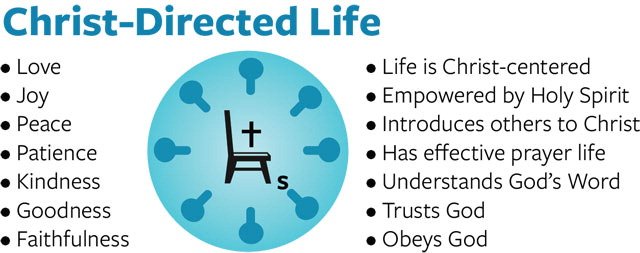
Yes, I did. At that time, the 4 Spiritual Laws tract was used widely. There was an illustration of the throne of the heart with self sitting on it and another illustration with Christ represented as replacing self on the throne.

Where does the book of Acts teach that?
In the sermons in Acts, the Lordship of Jesus is clearly proclaimed.


Acts 2:36
Therefore let all the house of Israel know assuredly, that God hath made the same Jesus, whom ye have crucified, both Lord and Christ.

To be saved, one must believe in Jesus, which includes correctly identifying Him as Savior, Lord, God manifested in the flesh.


John 20:28

And Thomas answered and said unto him, My Lord and my God.
 

Attachments

  • IMG_1261.jpeg
    IMG_1261.jpeg
    59.6 KB · Views: 2

John of Japan

Well-Known Member
Site Supporter
Yes, I did. At that time, the 4 Spiritual Laws tract was used widely. There was an illustration of the throne of the heart with self sitting on it and another illustration with Christ represented as replacing self on the throne.
Interesting. So at the time you believed, did you actually pray and say, "Jesus, I now make you Lord of my life"? Because that is the logical way to present the Gospel if LS is true, and I already quoted on this thread how Evangelism Explosion, by James Kennedy, says to do personal evangelism in just that way. But the tract doesn't advocate that, and as far as I know the personal evangelism method it presented did not require that.
In the sermons in Acts, the Lordship of Jesus is clearly proclaimed.


Acts 2:36
Therefore let all the house of Israel know assuredly, that God hath made the same Jesus, whom ye have crucified, both Lord and Christ.

To be saved, one must believe in Jesus, which includes correctly identifying Him as Savior, Lord, God manifested in the flesh.
That is not what the verse says. Nowhere in Peter's sermon in Acts does Pete say, "Now accept Christ as Lord." What Peter was saying is that Christ is Lord, whether anyone on earth thinks so or not. And that is absolutely true. Even before I ever surrendered my will to the Lord at age 16, or surrendered to be a missionary at age 20, Christ was Lord of the universe, and could do what He wanted with me. No human can make Christ what He already is.
John 20:28

And Thomas answered and said unto him, My Lord and my God.
So you think that is when Thomas got saved? I certainly don't. Thomas had called Jesus "Lord" already back in John 14:5.

Now, just to be clear. Are you saying that a person must explicitly accept Christ as Lord when he believes, or that the action is implicit in believing? Because James Kennedy taught that it must be explicit.
 
Last edited:

Ascetic X

Well-Known Member
Interesting. So at the time you believed, did you actually pray and say, "Jesus, I now make you Lord of my life"? Because that is the logical way to present the Gospel if LS is true, and I already quoted on this thread how Evangelism Explosion, by James Kennedy, says to do personal evangelism in just that way. But the tract doesn't advocate that, and as far as I know the personal evangelism method it presented did not require that.

Now, just to be clear. Are you saying that a person must explicitly accept Christ as Lord when he believes, or that the action is implicit in believing? Because James Kennedy taught that it must be explicit.
As a teenage convert, first hearing the gospel fully explained to me by the pastor at a Mennonite church camp, the idea was always “ask Jesus to come into your heart, receive Him as your personal Lord and Savior”.

Lord means Christ replaces self on the throne of your heart.

I don’t recall anyone saying “just believe in Jesus as the sacrifice for sin on your behalf”.

Lord to obey in your life and Savior who saves you from hell in the afterlife — these were always presented as a cohesive, inseparable unit.

However, this did not mean that if you struggled with Jesus being Lord in certain areas of your life, or if you failed completely, you thereby lost your salvation.

But if a person prayed a salvation prayer, and there was no change at all in their life behavior, the new birth probably did not really happen.

When I received Christ as Lord and Savior, my life changed in some ways. I boldly witnessed to people, I studied my Bible, I attended church services, I experienced joy and peace. But I struggled with honoring my parents, who were opposed to my conversion.
 

DaveXR650

Well-Known Member
Salvation is receiving Jesus as Lord, not just as Savior.
IMG_1260.png
I'm glad you put that up. I remembered it from my Campus Crusade days. The picture that is not there but was used by Campus Crusade was the same circle as above, with the Cross now being inside the life, but the "S" for self is still on the chair of the "throne" of one's life. This was supposed to show a "carnal" Christian. One fully saved but still with themselves in control of their lives as they had not made Christ Lord of their lives and given Him the throne. I never was fully comfortable with it, and in all honesty, a lot of the kids in that group were as sold out for Christ as you would ever find anywhere but still - that is what they taught.

And this is what seeped into many Baptist and evangelical churches and did a lot of damage because it created a scenario where in our culture, it would be completely stupid not to "get saved", get your assurance of Hell avoidance, yet still have freedom to enjoy life to whatever extent you wanted, without really worrying about what God's will might be in a given situation.

And this is what MacArthur and Paul Washer boldly stood against and sounded the alarm.
 

Ascetic X

Well-Known Member
I'm glad you put that up. I remembered it from my Campus Crusade days. The picture that is not there but was used by Campus Crusade was the same circle as above, with the Cross now being inside the life, but the "S" for self is still on the chair of the "throne" of one's life. This was supposed to show a "carnal" Christian. One fully saved but still with themselves in control of their lives as they had not made Christ Lord of their lives and given Him the throne. I never was fully comfortable with it, and in all honesty, a lot of the kids in that group were as sold out for Christ as you would ever find anywhere but still - that is what they taught.

And this is what seeped into many Baptist and evangelical churches and did a lot of damage because it created a scenario where in our culture, it would be completely stupid not to "get saved", get your assurance of Hell avoidance, yet still have freedom to enjoy life to whatever extent you wanted, without really worrying about what God's will might be in a given situation.

And this is what MacArthur and Paul Washer boldly stood against and sounded the alarm.
Yes, the hedonistic libertine Christian who had the righteousness of Christ imputed to him, so he was completely pure spiritually, even when smoking cigarettes, experimenting with drugs, getting drunk, strutting around pridefully, acting like a pompous know-it-all, enjoying worldly music, disrespecting parents, violating speed limits in a car, fornicating, over-eating, cussing, making fun of people, watching horror films, living selfishly, feeling aloof from the suffering of others.

It is the “ticket to heaven in my back pocket” syndrome.

Living like any unsaved person, except you enjoy reading your Bible, going to church, and talking about God.

The wrath of God is considered only something the unsaved need to worry about

Whether we need to commit to the Lordship of Christ at the moment of conversion, or full surrender is a gradual development, it is necessary for living the Christian life.

We must bow down to Christ as a Lord who despises hypocrites and lukewarm devotion.

I am careful to not ever be thinking sinful thoughts or working any iniquity.

Matthew 7

21 Not every one that saith unto me, Lord, Lord, shall enter into the kingdom of heaven; but he that doeth the will of my Father which is in heaven.

22 Many will say to me in that day, Lord, Lord, have we not prophesied in thy name? and in thy name have cast out devils? and in thy name done many wonderful works?

23 And then will I profess unto them, I never knew you: depart from me, ye that work iniquity.
 
Status
Not open for further replies.
Top