• Welcome to Baptist Board, a friendly forum to discuss the Baptist Faith in a friendly surrounding.

    Your voice is missing! You will need to register to get access to all the features that our community has to offer.

    We hope to see you as a part of our community soon and God Bless!

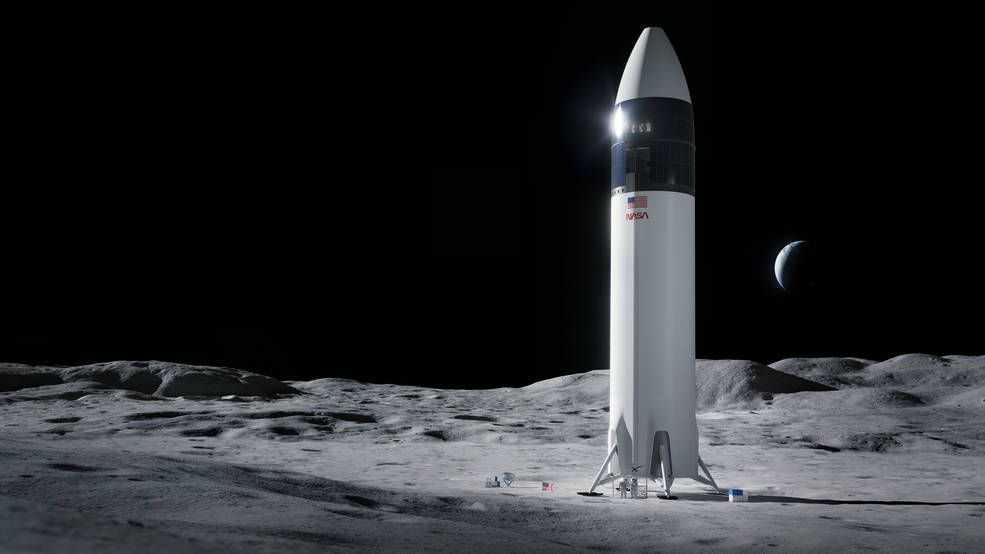
Artemis III - With SpaceX Lander?

atpollard

Well-Known Member
We have successfully regained the Apollo 8 (1968) capability to fly around the moon without landing on it after only 54 years of progress in Manned Spaceflight following the end of the Apollo Program.

[Just for the record, both the ISS and Artemis mission could have been achieved in the 1970's using Atlas and Delta rockets if we had not squandered the money on a SATURN V, SHUTTLE (STS) and CONSTELLATION (ARES V) that sucked up the whole budget to actually DO anything.]

We should have decades of data from long-term occupation on the Moon to know if Mars is even an option, instead of ZERO data on living in partial gravity.
 

Ascetic X

Well-Known Member
We have successfully regained the Apollo 8 (1968) capability to fly around the moon without landing on it after only 54 years of progress in Manned Spaceflight following the end of the Apollo Program.

[Just for the record, both the ISS and Artemis mission could have been achieved in the 1970's using Atlas and Delta rockets if we had not squandered the money on a SATURN V, SHUTTLE (STS) and CONSTELLATION (ARES V) that sucked up the whole budget to actually DO anything.]

We should have decades of data from long-term occupation on the Moon to know if Mars is even an option, instead of ZERO data on living in partial gravity.
It is all very fishy. Land on moon and explore it in 1969. Just fly by it in 2025.

I think the goal is to someday set up military bases with robots that can launch weapons back at enemies on Earth.

Humans are harmed by radiation in space.
 

atpollard

Well-Known Member
It is all very fishy. Land on moon and explore it in 1969. Just fly by it in 2025.

I think the goal is to someday set up military bases with robots that can launch weapons back at enemies on Earth.

Humans are harmed by radiation in space.
I think it is less sinister and more petty.

In the 1960's Russia launched a rocket into orbit and a man into orbit first, so the US was not going to be "beat" by Russia and set a goal of a "man on the moon by the end of the decade" to PROVE that we were better than the "bad guys". [Typical petty national politics unchanged since the 1600's.]

In the new millennium, China announces that it is going to place a man on the moon and build a base there. Well, petty politics will not let any Chinese Communists be better than America ... so we better do it first [again]. If China gets there first, then we will just have to put American boots and a flag on Mars (because that's what we do). :rolleyes:
 

Ascetic X

Well-Known Member
I think it is less sinister and more petty.

In the 1960's Russia launched a rocket into orbit and a man into orbit first, so the US was not going to be "beat" by Russia and set a goal of a "man on the moon by the end of the decade" to PROVE that we were better than the "bad guys". [Typical petty national politics unchanged since the 1600's.]

In the new millennium, China announces that it is going to place a man on the moon and build a base there. Well, petty politics will not let any Chinese Communists be better than America ... so we better do it first [again]. If China gets there first, then we will just have to put American boots and a flag on Mars (because that's what we do). :rolleyes:
I seriously doubt any base with humans will be installed on the moon or Mars. Humanoid robots maybe.

No air. No water. The gamma rays are far too intense for any practical long-term shielding.
 

JonC

Moderator
Moderator
I seriously doubt any base with humans will be installed on the moon or Mars. Humanoid robots maybe.

No air. No water. The gamma rays are far too intense for any practical long-term shielding.
I don't see radiation being an issue. I read an article putting the rate at 13.2 μGy/hour (1.32 mrem/hr). .... which is far lower than I would have thought.

But I question the logistics and cost (building and keeping a base supplied).

The benefit would have to outweigh the cost.
 

rockytopva

Well-Known Member
Site Supporter
I don't see radiation being an issue. I read an article putting the rate at 13.2 μGy/hour (1.32 mrem/hr). .... which is far lower than I would have thought.

But I question the logistics and cost (building and keeping a base supplied).

The benefit would have to outweigh the cost.

Logistics and cost... How long would a billion dollars per astronaut go?
 

atpollard

Well-Known Member
I don't see radiation being an issue. I read an article putting the rate at 13.2 μGy/hour (1.32 mrem/hr). .... which is far lower than I would have thought.

But I question the logistics and cost (building and keeping a base supplied).

The benefit would have to outweigh the cost.
We have the lessons from the Apollo Program ... It only needs to last until China abandons its plans (plus 1 Presidential Election), then it can be abandoned (like Apollo and Skylab and the Shuttle and Ares V ... and the ISS imminently). It is the reason that we have so little real progress after 60 years of funding the NASA "political football".
 

atpollard

Well-Known Member
Logistics and cost... How long would a billion dollars per astronaut go?
NASA needs to shift back to a DARPA-like role of pushing frontiers to create a foothold for Commercial to build upon. The ISS should have been a NASA power Module in LEO that anyone could connect a module to and build a destination. Then it would still be growing with new Bigelow and Spacex modules and modules from Japan and ESA and India and China and Russia and Lockheed and Boeing and anyone else that had a reason to want to be in LEO with NASA free to concentrate on researching new technology (like Plug Nozzles and Orbital Fuel Transfer).
 
Top